


 English
 русский
 Español
 عربى
عربىSmall Gear Reduction Motor
-- Steady & Reliable Manufacturer --
A Small Gear Reduction Motor pairs a compact electric motor with an integrated gearbox, converting the motor's naturally high-speed, low-torque output into the slower, higher-torque rotation that most small machinery actually needs. On its own, a small motor typically spins far faster than any practical application requires while producing too little turning force to move a real mechanical load - the gearbox is what closes that gap, and the specific ratio built into it determines exactly how much speed is traded away for torque.
How the Reduction Ratio Changes What the Motor Can Actually Do
The reduction ratio is usually written as a number like 10:1 or 50:1, and it describes how many times the internal gears turn for every single output-shaft rotation. A 50:1 ratio means the motor spins fifty times faster than the output shaft, and that trade-off is not free - the output shaft gains roughly fifty times the torque in exchange for that reduced speed, assuming reasonable mechanical efficiency through the gear train. This relationship is the entire basis for selecting a gear motor: buyers are not really choosing "a motor," they are choosing a specific speed-and-torque combination for a specific mechanical job.
Backlash - the small amount of play between meshing gear teeth - is a second characteristic worth understanding alongside the ratio itself. A small amount of backlash is normal and rarely causes a problem in applications like conveyor drives or general actuation, but in positioning equipment where precise, repeatable movement matters, excess backlash shows up as small inaccuracies every time the mechanism reverses direction. Precision applications generally call for a low-backlash gear set, which is a specification worth stating explicitly rather than assuming any small gear motor will perform identically in this respect.
Choosing Between Common Gear Motor Configurations
Parallel-shaft and right-angle configurations serve different mechanical layouts, and the choice is usually dictated by available space rather than performance alone. A parallel-shaft gear motor keeps the output shaft in line with the motor body, which suits equipment with room to accommodate that overall length. A right-angle configuration turns the output ninety degrees from the motor, which is often the better fit inside a compact housing where a straight-through design simply will not fit, even though it typically costs somewhat more to manufacture than an equivalent parallel-shaft unit.
Mounting style matters just as much as shaft orientation. Foot-mounted, flange-mounted, and hollow-shaft designs each integrate differently into a piece of equipment, and retrofitting the wrong mounting style onto an existing machine frame is one of the more common - and avoidable - complications in a gear motor sourcing project. Confirming mounting style alongside ratio and shaft orientation at the specification stage saves a redesign later.
What Matters Most When Sourcing at Volume
For OEMs building equipment around a gear motor rather than replacing a single unit, batch consistency in the gearbox matters as much as the motor's electrical specification. A gear train that is properly cut and assembled on one unit but slightly out of tolerance on the next introduces variation in noise, backlash, and even service life across a production run - variation that is invisible on a single sample but becomes a real quality problem at scale. Asking a supplier directly about gear-cutting tolerance and testing process, rather than assuming all "50:1 gear motors" are functionally identical, is one of the more useful questions a buyer can ask before committing to a large order.
Overhung load rating - how much side load the output shaft can tolerate from a pulley, sprocket, or gear mounted directly on it - is another specification that gets overlooked until a shaft or bearing fails earlier than expected in the field. This figure depends on both the gearbox design and the bearing selection inside it, and it is worth requesting directly from a supplier when the application involves any significant radial load on the output shaft rather than a purely axial connection.
A small gear reduction motor earns its place in a piece of equipment by delivering a specific, predictable speed-and-torque combination reliably over the product's service life - which is a different evaluation than simply confirming that a motor "runs" during a first sample check, and it is worth treating it that way throughout the sourcing process.


Specifications
| Parameter | Typical Range |
|---|---|
| Motor Type | AC or DC motor with integrated gearbox |
| Reduction Ratio | 3:1 - 100:1, custom ratios available |
| Output Torque | 0.5 - 15 N·m depending on ratio and motor size |
| Shaft Configuration | Parallel-shaft or right-angle |
| Mounting Style | Foot-mounted, flange-mounted, or hollow-shaft |
| Backlash | Standard or low-backlash gear sets available |
Applications
- Conveyor and Material Handling Systems - steady, high-torque drive for continuous or indexed conveyor movement.
- Automation and Actuation Equipment - compact, precise motion for small automated mechanisms and linear actuators.
- Packaging Machinery - repeatable, controlled motion for indexing, sealing, and feed mechanisms.
- Valve and Damper Actuators - high torque at low speed for opening and closing mechanical valves.
Manufacturing Capability
A gear motor is only as consistent as the gear-cutting and assembly process behind it, so tolerance control and testing are handled on our own production lines rather than outsourced.
- In-house gear cutting and assembly with tolerance verification
- Backlash and noise testing on finished gear sets
- Output torque and overhung load testing before release to production
- Run-testing to confirm consistent performance across a full ratio range
Customization
Gear motor projects are built around your specific speed-and-torque requirement, so most specification work starts from your target output rather than a fixed catalog ratio.
- Reduction ratio tuned to your target output speed and torque
- Shaft orientation and mounting style matched to your equipment layout
- Low-backlash gear sets available for precision positioning applications
- Sample development typically completed within 7-15 business days
Ordering Process
- Step 1. Share your target speed, torque, and mounting requirements
- Step 2. Engineering proposes a ratio and gearbox configuration
- Step 3. Sample production and torque/backlash testing
- Step 4. Sample approval and quotation confirmation
- Step 5. Mass production and pre-shipment inspection
Standard payment terms are T/T with a deposit before production and balance before shipment; L/C is accepted for larger orders.
About jiangxin
SHENGZHOU JIANGXIN MOTOR TECHNOLOGY CO., LTD.
Shengzhou Jiangxin Motor Technology Co., Ltd., established in 2017, is a professional manufacturer dedicated to the R&D, production and sales of high-quality AC/DC motors and micro motors. Based in Shengzhou, Zhejiang, we enjoy a convenient location and superior industrial support in the Yangtze River Delta.
As China Small Gear Reduction Motor Manufacturers and Small Gear Reduction Motor Factory, we own modern production facilities, advanced automated equipment and a professional R&D team, and have been recognized as a provincial-level technology enterprise. With strict quality control systems and strong innovation capabilities, we focus on producing reliable, energy-efficient and long-lasting motors.
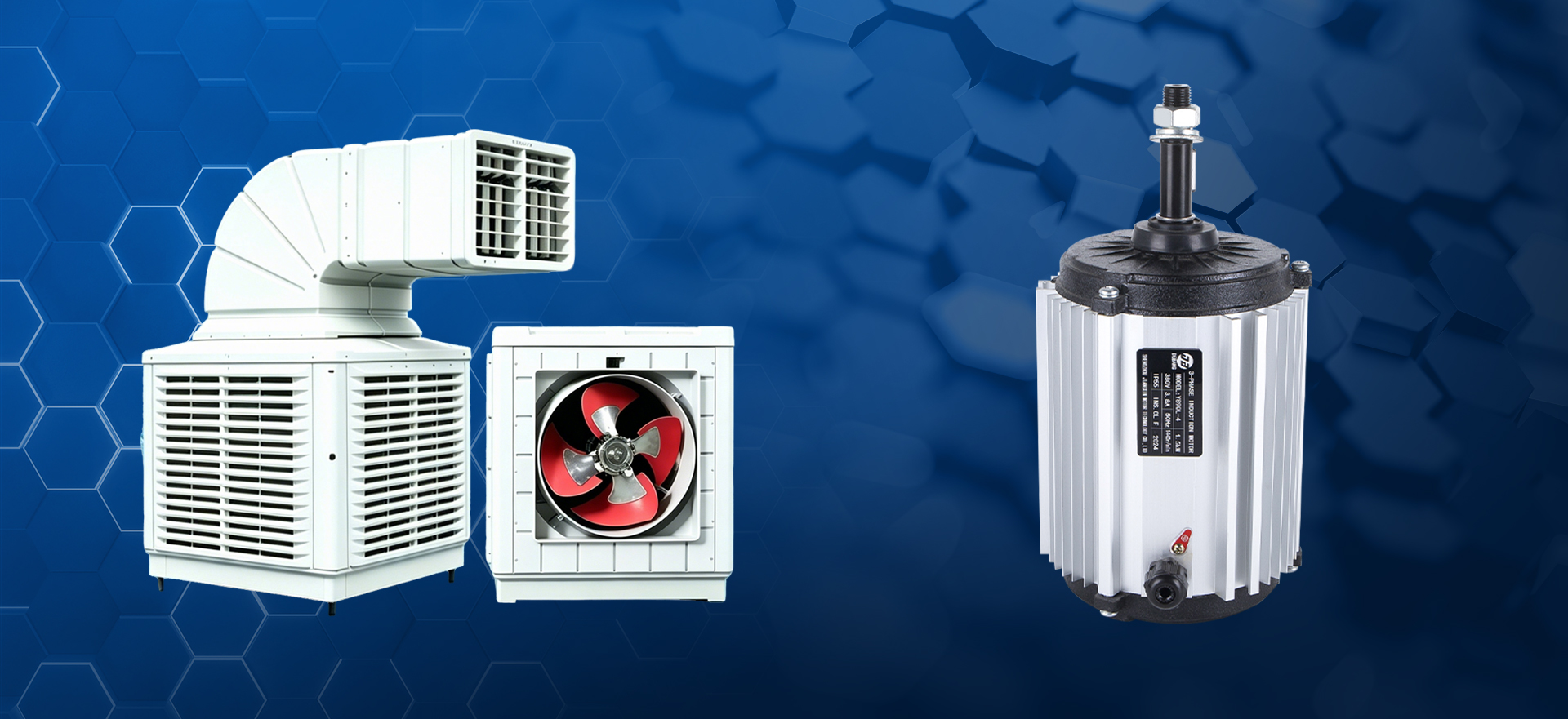
Our main products include evaporative air cooler motors, industrial heater motors, oil pump motors and customized motors, which are widely used in environmental protection equipment, industrial heating, hydraulic systems and other fields. Our products are exported to more than 60 countries and regions around the world.
Adhering to the spirit of craftsmanship and customer-oriented service, we continue to provide stable products and professional solutions. We are committed to becoming a trusted partner in the global motor industry and creating long-term value for customers.
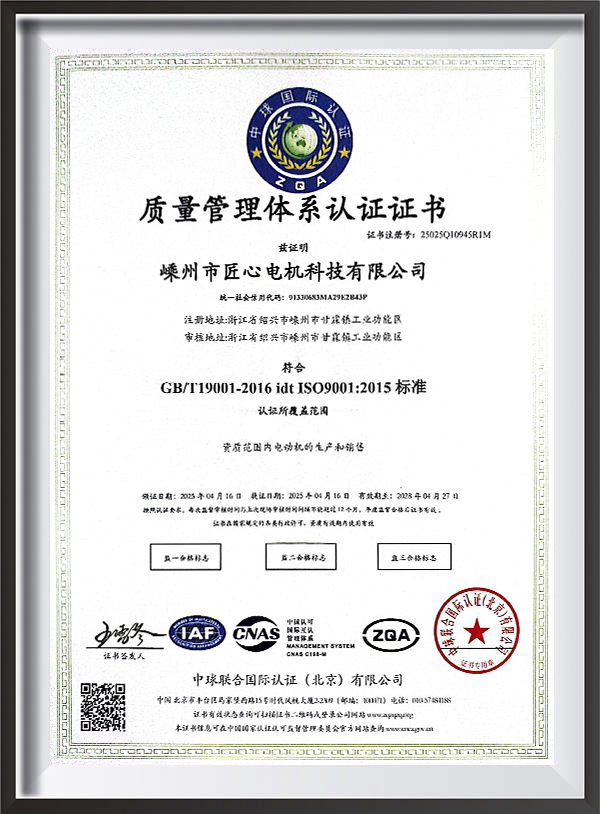
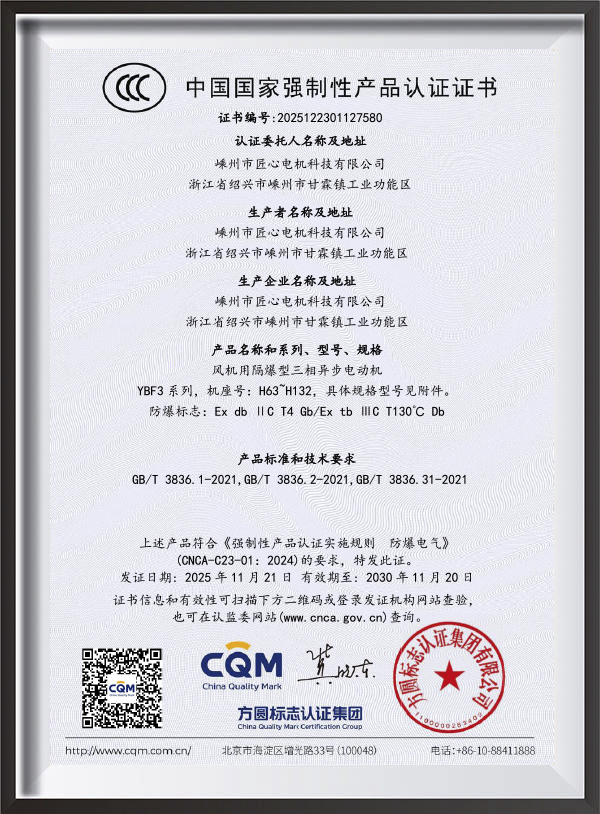
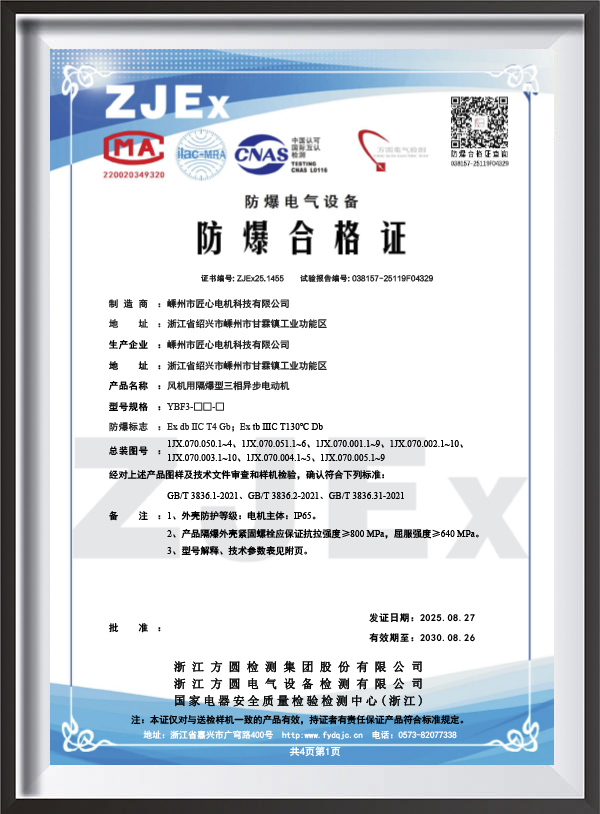
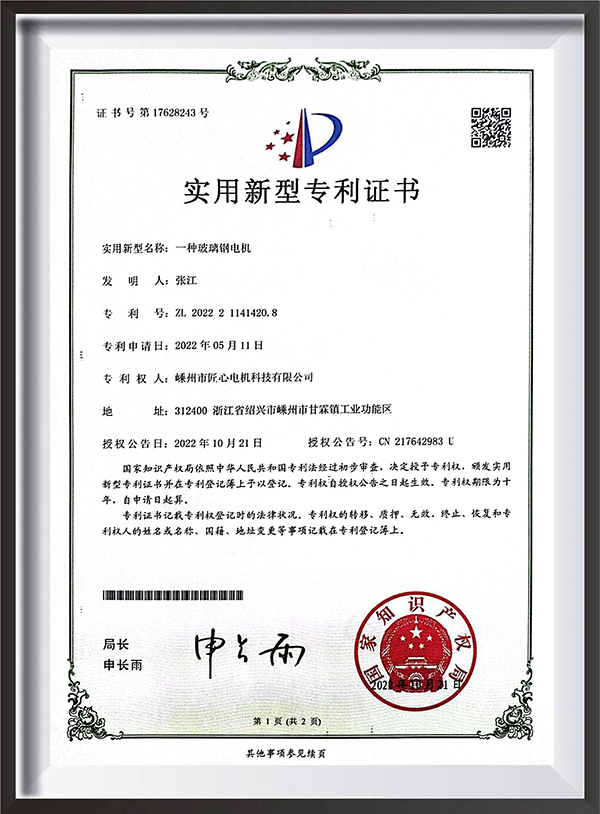
Certificate Of Honor
View More Certificates
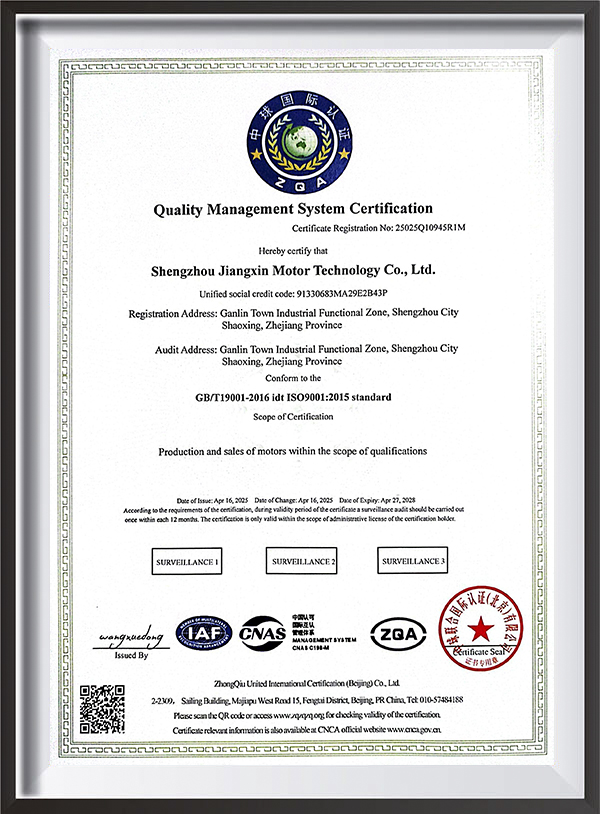
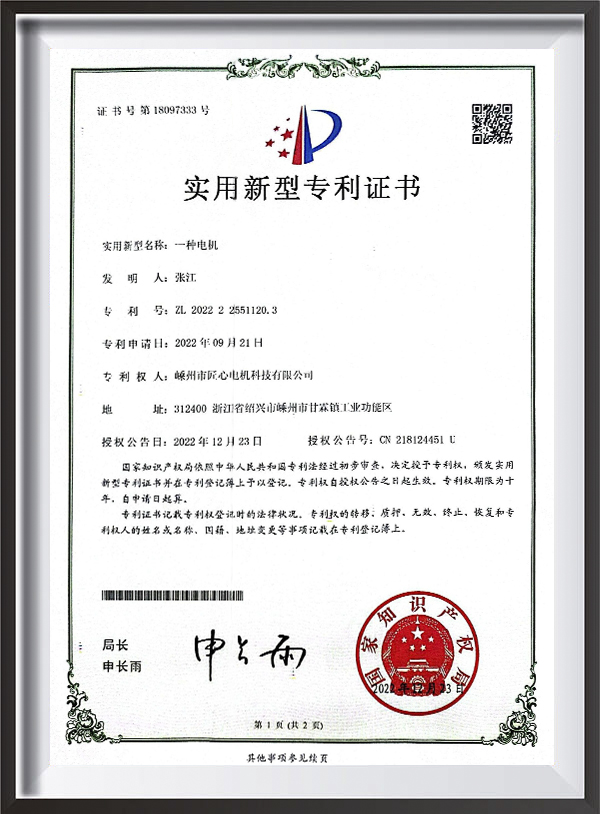
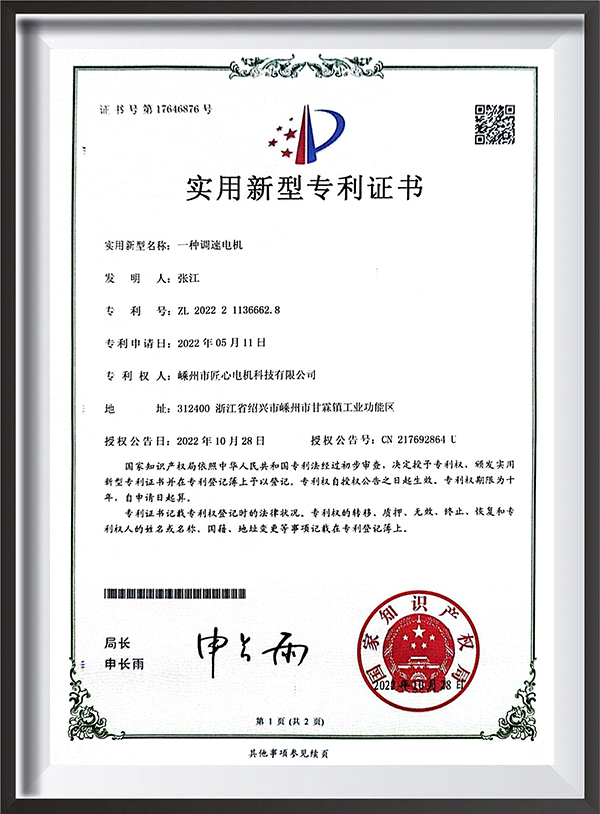
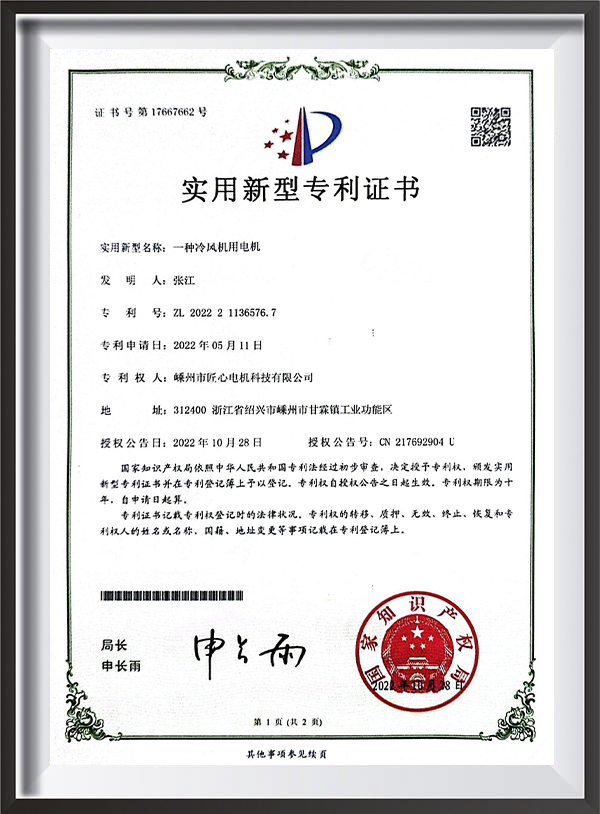
Jiangxin Motor holds CNIPA utility model patents for structural and performance improvements in micro, fan, and AC motors, showcasing our energy-saving expertise and commitment to reliable, high-efficiency solutions.
Message Feedback
Request a Quote
Tell us your requirements and our engineering team will get back to you.