

 English
 русский
 Español
 عربى
عربى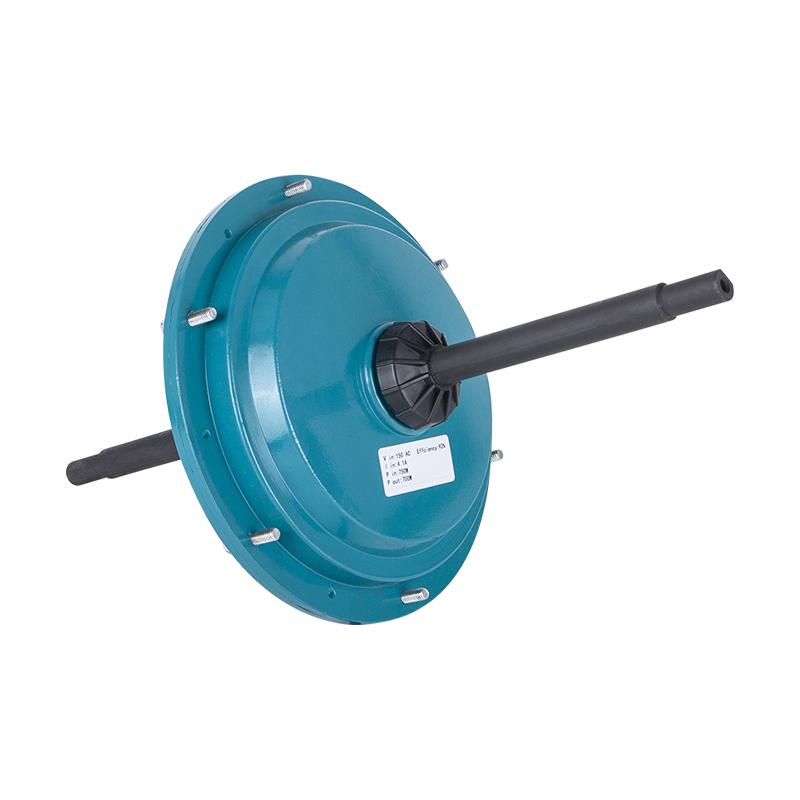

No. 8, Duxiu San Road, Ganlin Town, Shengzhou City, Shaoxing City, Zhejiang Province, China

News Category
Product Category
What Is a BLDC Motor? How It Works, Key Advantages, and Selection Tips
Content
An industrial evaporative cooler that runs through a full production shift needs a motor that stays cool, holds its torque, and does not demand weekly maintenance. This is where a brushless DC motor, or BLDC motor, has become the standard choice. The short answer is that a BLDC motor is a synchronous electric motor powered by direct current, with rotation produced by electronic commutation instead of mechanical brushes. Unlike a traditional brushed DC motor, the BLDC design removes the physical contact between stationary and rotating parts that causes wear, electrical noise, and efficiency loss.
What Is a BLDC Motor?
A brushless DC electric motor is a motor that uses a direct current supply, but it receives its switching signals from an electronic controller rather than from a brush and commutator assembly. The rotor carries permanent magnets, while the stator contains the windings. Because the magnets rotate and the windings stay fixed, there is no need for brushes to transfer current into a moving rotor. This is the opposite arrangement in a conventional brushed motor, where the windings rotate and the stationary brushes supply current through a commutator.
BLDC motors are often called electronically commutated motors in the heating, ventilation, and air conditioning (HVAC) industry. In that context, the term describes a motor that has an integrated electronic control board, but the underlying principle is the same. The controller energizes the stator phases in a sequence that follows the rotor position, generating a rotating magnetic field that pulls the permanent-magnet rotor along with it.
Because a BLDC motor is a synchronous machine, its rotor rotates at the same speed as the stator field. That speed is determined by the frequency of the switching signals, not by the voltage applied. This is an important distinction when you compare it to a universal motor or a brushed DC motor, where speed is more directly tied to the applied voltage.
How a BLDC Motor Works
The operation of a BLDC motor depends on three basic elements: a three-phase stator winding, a permanent-magnet rotor, and an electronic controller that knows the rotor position. The controller may use Hall effect sensors mounted on the stator, or it may use sensorless methods that estimate position from back-EMF. In many industrial BLDC motors, Hall sensors are preferred because they provide reliable startup torque and robust operation at low speed.
The sequence of commutation is typically six-step for a three-phase motor. At any moment, two of the three phases are energized, while the third is floating. The controller switches the phase pairs in a fixed order. This creates a rotating stator field. The permanent magnets on the rotor try to align with that field, and the resulting magnetic attractive force produces torque. As the rotor moves, the controller changes the energized phases again, so the field stays ahead of the rotor and continues to pull it forward.
The electronic speed controller (ESC) also allows precise regulation of speed and torque. It can regulate current, limit acceleration, and even implement field-oriented control for smoother operation and higher efficiency. Because the controller can adjust the switching pattern continuously, a BLDC motor can maintain high efficiency across a wide speed range. This is why BLDC motors are common in variable-speed fans, pumps, compressors, and other equipment where load conditions change.
For a fan or air-cooler application, the BLDC motor also offers a simpler mechanical structure. Since the rotor is external in certain constructions, the fan blades can be mounted directly on the outer shell. That eliminates the need for a belt or pulley and can even shorten the axial length of the unit. This direct-drive approach reduces mechanical losses and lowers the total cost of ownership for the equipment maker.
BLDC vs Brushed DC Motors
The choice between a brushed DC motor and a BLDC motor is usually a trade-off between initial cost and long-term performance. To make that decision, it helps to put both constructions side by side.
| Criterion | Brushed DC Motor | BLDC Motor |
|---|---|---|
| Commutation method | Mechanical brush and commutator | Electronic controller |
| Efficiency | Moderate, partly lost to brush friction and arcing | High, no brush contact loss |
| Lifespan | Limited by brush wear | Long, dependent on bearing life |
| Noise and EMI | Brush arcing creates audible and electrical noise | Quiet operation with lower electromagnetic interference |
| Speed control | Simple voltage regulation, but less stable | Precise control over wide speed range |
| Cost | Low initial purchase price | Higher initial cost, often offset by efficiency gains |
| Maintenance | Requires periodic brush replacement | Virtually maintenance-free |
For a manufacturer that builds equipment sold to industrial customers, the longer lifespan and lower maintenance burden of a BLDC motor often justify the initial price difference. The cost gap has narrowed considerably in recent years because integrated controllers and sensor packages are now mass-produced at much lower prices.
Key Components of a BLDC Motor
When you open a BLDC motor, you will find a limited set of parts, but the quality of each one matters for reliability. A typical BLDC motor consists of the following.
- Stator assembly with lamination stack, copper windings, and a housing that also acts as a heat sink.
- Rotor assembly with permanent magnets made from ferrite or rare-earth materials, mounted on a shaft or rotating shell.
- Position sensors such as Hall elements or Hall effect ICs, or a sensorless feedback circuit that reads back-EMF.
- Electronic controller board with power MOSFETs, gate drivers, a microcontroller, and a DC bus capacitor.
- Bearings and seals that support the rotor and protect the interior from dust and moisture.
In an external rotor motor, the magnets are attached to the inside of a rotating cylinder. The stator remains in the center. This construction is common in fan motors because the outer cylinder can be fitted with blades or a fan impeller directly. The external rotor design also provides a large surface area for heat dissipation and can deliver high torque at low speed without a gearbox.
Common Applications of BLDC Motors
BLDC motors can be found in a wide range of products, from tiny computer fans to large industrial drives. The global preference for this technology comes from its efficiency, controllability, and quiet operation. Some of the most common application categories include:
- Home appliances such as washing machines, refrigerator compressors, and dryers, where variable speed and energy savings are important.
- Heating, ventilation, and air conditioning equipment, including condenser fans, evaporative air coolers, and industrial exhaust fans.
- Cordless power tools, where high power density and small size allow for handheld operation.
- Electric vehicles and e-bikes, which rely on BLDC motors for their flat torque and compactness.
- Industrial machinery, including pumps, conveyor drives, and automation systems that need precise speed control.
In the industrial fan sector, the range of BLDC motors covers both low-power EC fans and high-power three-phase devices. For example, an external BLDC air cooler motor rated at 600 W can drive a large impeller in an evaporative cooling unit, while a 1500 W version might serve a bigger industrial air handler.
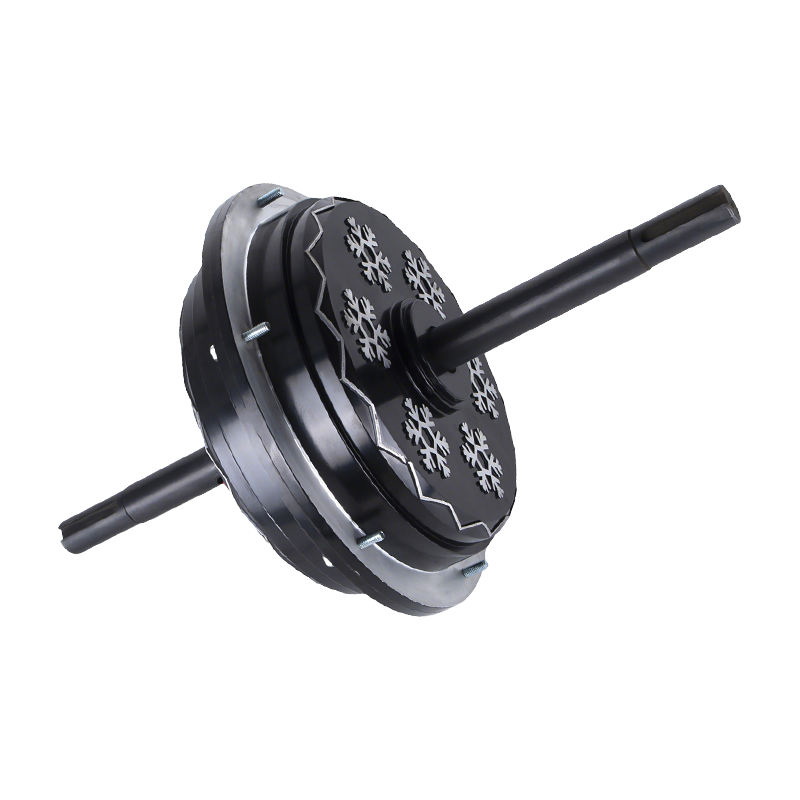
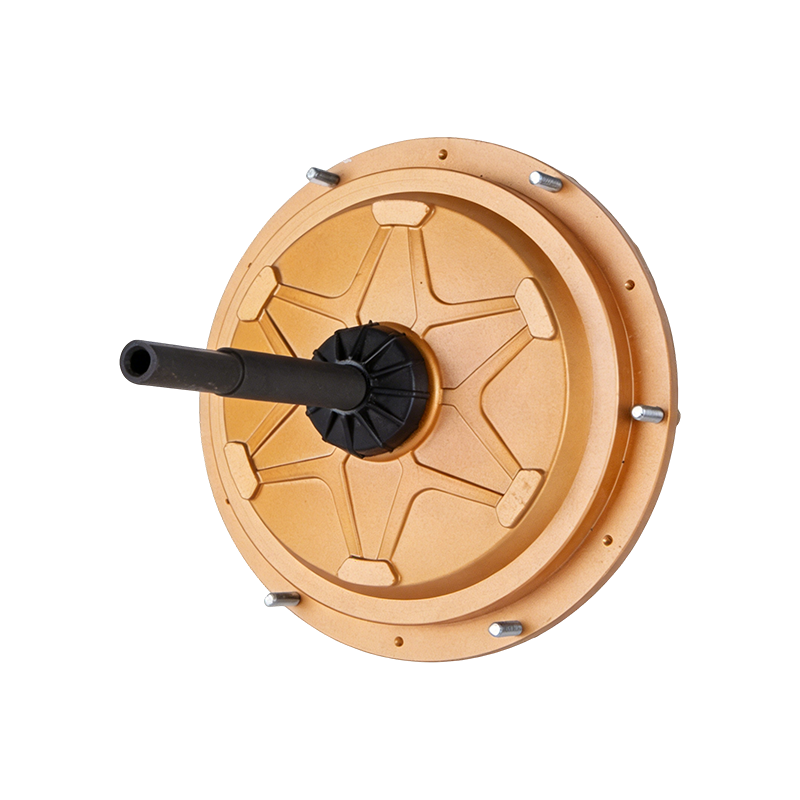 220V 600W External Rotor BLDC Motor for Industrial Air CoolersThis motor drives large air cooler impellers directly with 600W power and a 220V supply, offering brushless reliability, high torque, and protection for harsh industrial environments.View Product →
Choosing a BLDC Motor for Your Application
Selecting a BLDC motor is more than picking the one with the highest efficiency. You must match the motor to the mechanical load, the available power supply, and the environmental conditions. Start with the real torque-and-speed demands of the equipment. A fan that must move 3000 cubic meters per hour against a static pressure of 50 Pa will need a certain speed and impeller diameter. That determines the motor power requirement. Once you have the required electrical and mechanical power, you can calculate the input voltage, current rating, and controller switching frequency.
Voltage margin is also critical. If your motor is rated for 220 V AC input, you must consider the actual line voltage variations in your region. A 220 V motor that sees a sustained 240 V supply may run hotter, and a motor that sees 200 V may not reach its rated speed. For three-phase systems, both the voltage level and the frequency of the supply matter. In a BLDC motor, the frequency coming from the controller is what governs speed, but the main supply voltage must stay within the controller's operating window.
Ambient temperature is another factor that is frequently underestimated. A motor installed in a small enclosure or on the roof of a factory may face 45°C ambient air. The motor's insulation class and the bearing grease rating should both be selected to handle that continuous temperature. Otherwise, a perfectly good BLDC motor can lose precious operating life after only a few seasons.
For air-cooling equipment, the external rotor BLDC architecture offers a natural fit. The outer rotor can carry the fan blades directly, and the motor can be mounted in the airstream to benefit from the cooling effect. The manufacturer must still verify the motor's IP rating. If the motor will be exposed to water spray or dust, an IP55 or higher enclosure is recommended. A lower IP rating may be acceptable for indoor applications, but it would be a risk for agricultural or outdoor equipment.
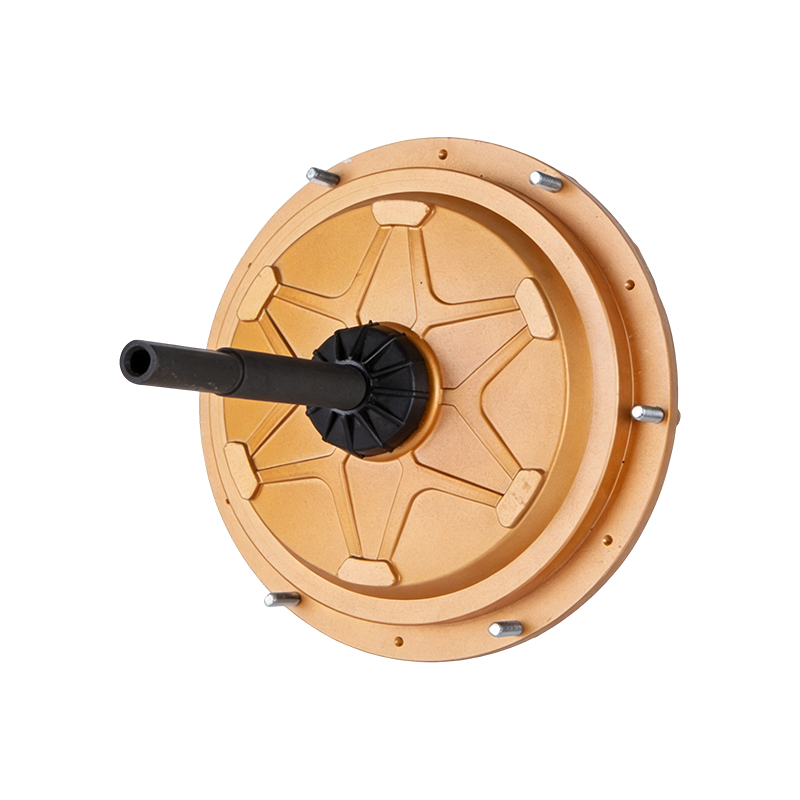
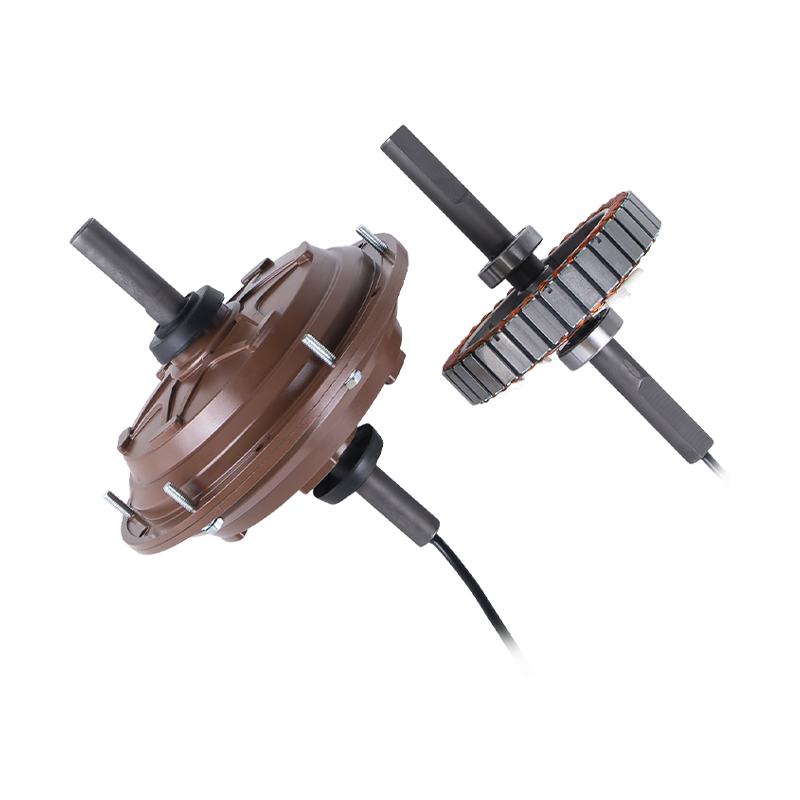 220V 650W External Rotor BLDC Air Cooler Motor with IP55A 650W brushless motor with IP55 protection and F-class insulation, designed for continuous operation in dusty or humid cooling applications, supporting stepless speed control.View Product →
Another key selection criterion is the torque-speed curve in a fan load. A fan is a variable-torque load: the torque required increases roughly with the square of the speed. A BLDC motor designed with a fan curve in mind can deliver enough starting torque to spin the impeller from rest, while still maintaining high efficiency at the design point. If you use a BLDC motor with the wrong torque-speed characteristic, the motor may stall at startup or run into constant overcurrent at high speed.
After narrowing down the motor family, the practical procurement process includes reviewing samples, measuring real input power, checking winding temperature under load, and assessing the noise level. The latter is often overlooked by equipment designers, but in a fan application the motor's electromagnetic noise can be amplified by the impeller and the ductwork. A BLDC motor with a low cogging torque and a well-tuned controller can keep audible noise below 65 dB(A), which is often a target for indoor industrial applications.
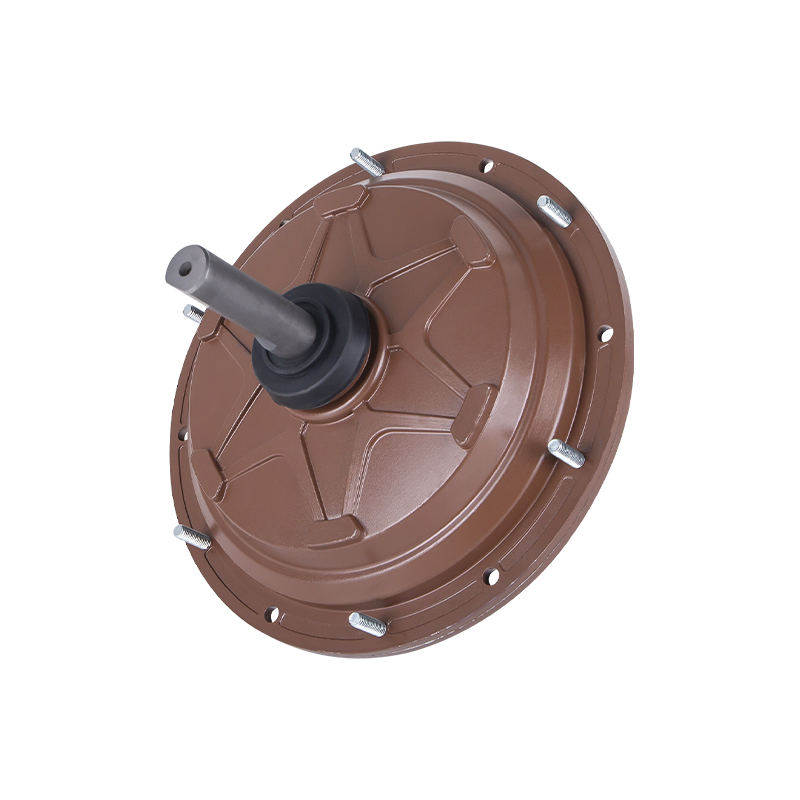
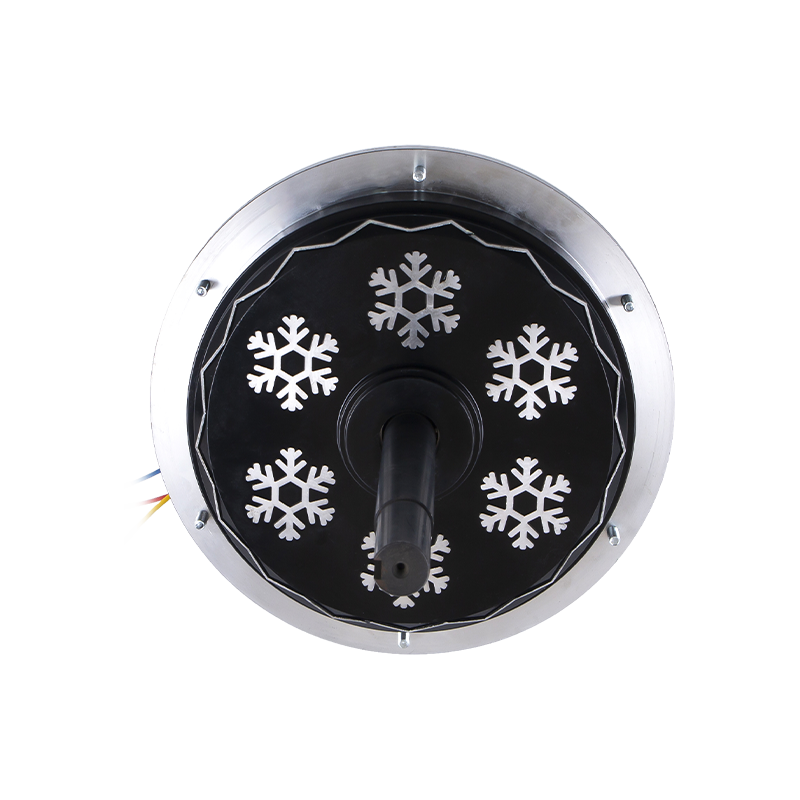 220V 1500W External Rotor BLDC Motor for Heavy-Duty VentilationThis high-power 1500W motor suits large industrial air coolers and ventilation systems, featuring pure copper windings, IP54 rating, and quiet operation for demanding settings.View Product →
What to Verify with Your BLDC Motor Supplier
When you work with a motor manufacturer, a clear specification sheet is your first line of defense. The document should list rated power at a specific speed, rated current, line current at no load, insulation class, winding resistance, torque constant, and the allowable current range. If a supplier cannot provide these values, it becomes very difficult to validate whether the motor will survive long-term operation in your equipment.
It is also prudent to ask about the quality system used in the factory. A certified ISO 9001 process is a useful baseline, but you can go further by requesting in-line testing records, such as no-load current and voltage measurements for each production lot. For critical applications, an additional electrical test at high voltage or a run-in test under full load can reveal production flaws.
A supplier with a clear line of products for specific applications, such as evaporative air coolers and industrial fans, can often adapt an existing motor to your requirement through simple modifications such as shaft dimensions, terminal leads, or an integrated controller. This custom approach saves development time and reduces the risk of using a generic motor that was never intended for a fan load. In this respect, motors designed for air cooling equipment are not simply packaged differently; they are electrically tuned to the same class of load.
Why BLDC Motors Matter in Industrial Cooling
Industrial cooling equipment has become a testing ground for energy-efficiency regulations in many markets. Operators now expect fans and coolers to respond to variable load conditions rather than running at a fixed speed. A BLDC motor can throttle down when the outside temperature drops, and it can ramp up when a steep temperature rise occurs. This variable-speed capability is the main reason why industrial air-conditioning and industrial-fan applications have shifted to BLDC technology.
Another practical benefit is the smooth, brushless construction. Since there are no brushes to wear out, a BLDC motor can run for tens of thousands of hours without the need for scheduled replacements. This cuts service calls and parts costs, which is a decisive advantage for a fleet of coolers installed in multiple production sites.
The lower electrical noise produced by a BLDC motor also improves the performance of sensitive electronic devices that may be placed nearby. And the absence of arcing makes the motor safer in environments where combustible dust or vapor is present. These are not just theoretical benefits: they translate into tangible savings over the life of the equipment.
If you are currently designing an evaporative air cooler with a single-speed asynchronous motor, checking the possibility of moving to a BLDC solution is not a question of whether the technology is mature. It is already mature. The decision is about whether the energy savings, lower maintenance, and longer service life can offset the higher initial component price. In most industrial applications, the answer is yes.
Conclusion
A BLDC motor is a direct-current synchronous motor with electronic commutation. It replaces the brush and commutator of a conventional DC motor with a controller and position sensors, giving it higher efficiency, longer life, and quieter operation. While the initial purchase price is higher, the operating advantages are substantial for equipment that runs continuously. For fans, coolers, and industrial ventilation systems, an external rotor BLDC motor is a proven way to achieve variable speed control and low maintenance.
When you select a BLDC motor, focus on the required power, speed range, voltage, ambient temperature, and environmental protection. Request clear specifications from your supplier, run a sample test, and verify motor temperature and current under actual load. That process will protect your final product's quality and avoid expensive field failures. A well-selected BLDC motor will normally pay for itself within a couple of years through energy savings and reduced servicing.
Putting the Selection Criteria into Practice
To illustrate the specifics, let us take an evaporative air cooler manufacturer who needs to replace an old 750 W asynchronous motor. The new BLDC motor should operate from a 220 V single-phase supply and deliver the same airflow at the rated speed. The external rotor design is chosen because it reduces the height of the fan assembly and allows the fan blades to mount directly on the rotor shell. The selected motor must be able to start against the full inertia of the impeller and still maintain a stable speed with ±5% line voltage variation.
In such a scenario, a 650 W or 700 W BLDC motor may be enough when the speed can be increased slightly, because the motor's torque density is higher than that of the old asynchronous machine. The customer can then compare the input power at the design point: if the BLDC unit draws 10% less electrical power at the same airflow, the energy savings can be large in a facility with hundreds of cooling units.
Another practical point is controllability. Some BLDC motors come with an analog speed input from 0 to 10 V, while others provide a PWM input or a MODBUS RTU interface. The choice depends on the existing control system. A simple temperature switch may not need more than an on/off signal, but an automated building management system will benefit from a motor that can report actual current and speed. This feature is increasingly expected in industrial air-conditioning and industrial-fan installations.
Finally, remember that the BLDC motor itself is only as good as the controller that drives it. A controller with poor thermal design or inadequate protection functions can cause the motor to fail prematurely. Look for a motor manufacturer that also supplies an matched controller or, at least, one that can recommend a controller with verified operating characteristics. This pre-integration reduces the engineering work needed in your design phase.
 Ready To Customise
 Your Motor Products?

We are professional motor manufacturers, delivering powerful, stable, and efficient power cores for all industries through precision craftsmanship and innovation.
Contact Us
-
 Mobile:+86 13575536911
-
 Tel:+86 18357538240
-
 Whatsapp:+8618357538240
-
 Email:betty@dbjxmotor.com
-
 Company Address
Copyright © by Shengzhou Jiangxin Motor Technology Co., Ltd. All Rights Reserved.
Wholesale Industrial Fan Motors Manufacturers
