

 English
 русский
 Español
 عربى
عربى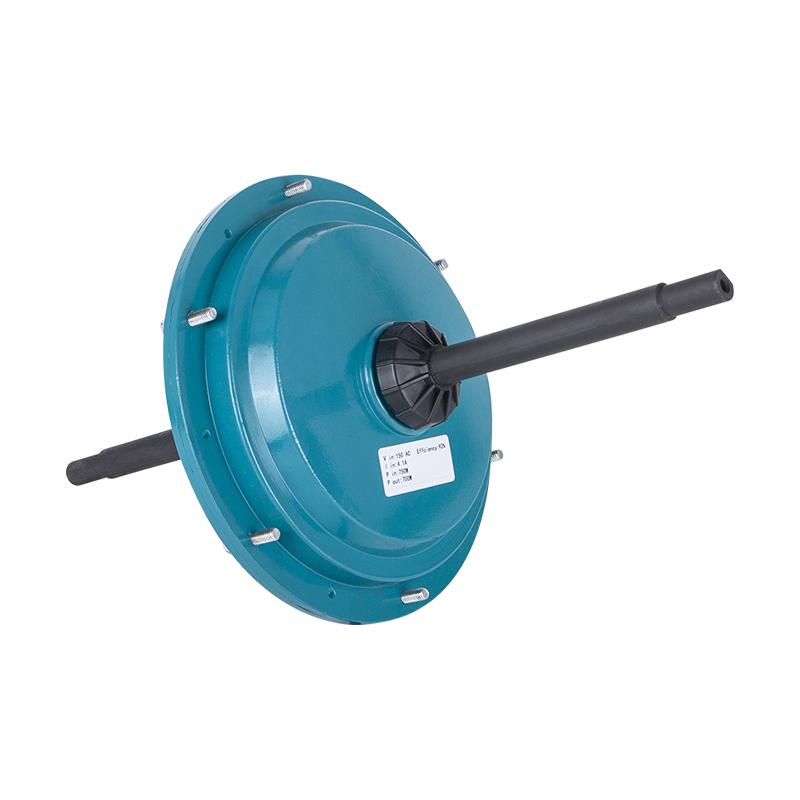

No. 8, Duxiu San Road, Ganlin Town, Shengzhou City, Shaoxing City, Zhejiang Province, China

News Category
Product Category
Is a BLDC Motor AC or DC? How Electronically Commutated Motors Actually Work
Content
- 1 The Short Answer: BLDC Is DC-Fed, AC-Driven
- 2 What a Brushless DC Motor Is Made Of
- 3 Why Brushes Were the Original Failure Point
- 4 How the Controller Creates Alternating Current from DC
- 5 Why the DC Label Stays Even though the Windings Run AC
- 6 BLDC vs AC Induction vs Brushed DC at a Glance
- 7 Practical Buying and Integration Considerations
- 8 Where BLDC Motors Matter in Real Equipment
- 9 A Clear Way to Frame BLDC in Your Specification
The Short Answer: BLDC Is DC-Fed, AC-Driven
An engineer in an equipment specification meeting asks whether the BLDC motor on an air cooler is AC or DC. The answer decides the controller, the wiring diagram, and the safety documentation. Get it wrong and the motor will not produce torque at all. The direct answer is that a brushless DC motor is DC-fed and AC-driven. It receives DC power from the source, then uses an electronic controller to generate three-phase AC voltage across the stator windings.
If you measure the current entering the motor from the supply, you see DC. If you measure the current in each winding phase, you see AC. That dual nature is exactly why the question appears so frequently in OEM discussions. For a buyer, the practical consequence is clear: a BLDC motor cannot be connected directly to an AC mains line. It needs a driver between the supply and the windings. Without that driver, the windings stay fixed in one state and the rotor remains stationary.
The part of the system you are actually specifying determines how the AC/DC question should be framed. The supply side is DC-centric. The motor side is AC by nature. The sections below explain both sides and point out what to watch for when sourcing motors for production.
What a Brushless DC Motor Is Made Of
A BLDC motor is a synchronous machine with permanent magnets on the rotor and three-phase windings on the stator. The rotor has no windings, no brushes, and no commutator. The stator windings are the same type you would expect in an AC induction motor. The word "brushless" tells you that the mechanical commutation system used in a traditional DC motor has been replaced with electronic switching.
The machine itself is essentially a permanent magnet synchronous motor (PMSM). In industrial and academic settings, the same hardware is often called a PMSM or an AC servo motor when used for precise motion control. The label changes based on the intended control scheme and the application, not the physical construction. The motor does not care whether the supplier calls it BLDC, EC, or PMSM. What matters is how the controller drives it.
What makes the motor behave like a DC motor to the user is the controller. The controller uses position feedback from Hall sensors, a resolver, or sensorless back-EMF detection to determine when to energize each winding phase. Because the controller switches current electronically rather than through carbon brushes, maintenance needs drop significantly and speed control becomes far more precise.
Why Brushes Were the Original Failure Point
In a classic brushed DC motor, the commutator is a rotating switch made from copper segments. Carbon brushes ride against the segments and reverse the current in each armature winding at exactly the right moment. The electrical principle is straightforward. The execution is where the problems begin.
Brushes wear out over time, generate sparks, and release fine conductive dust. At higher speeds, mechanical wear accelerates. In a ventilation fan or an evaporative air cooler running thousands of hours per year, brush replacement becomes a real operating expense. The failure is also difficult to predict, which creates headaches for OEMs shipping equipment to customers in different climates.
Electronically commutated motors remove that entire failure mode. The controller takes over the switching duty. This is why BLDC and EC motors have become the default choice in industrial fans, evaporative coolers, and other equipment where duty cycle and long-term maintenance are critical factors in the purchasing decision.
How the Controller Creates Alternating Current from DC
The controller performs several jobs in sequence. First, it maintains a DC bus voltage, either from a battery or from rectified AC mains. Second, it uses six transistors arranged in a three-phase bridge to switch the DC bus voltage across the three stator windings. This switching creates a rotating magnetic field that the rotor magnets follow.
The switching sequence determines speed and torque. Instead of being tied to a fixed grid frequency, the controller generates a frequency and amplitude matched to the current load. That is why a BLDC motor can run efficiently across a broad speed range, while an AC induction motor connected directly to the grid runs at a nearly constant speed unless a variable frequency drive is added.
In short, the BLDC motor behaves like a synchronous AC machine. The connection between the source and the motor is fundamentally DC-oriented. The controller is the bridge between the two domains. It is also the component that most often fails when a motor is supplied without a matched driver, so the driver must be specified with the same care as the motor itself.
Why the DC Label Stays Even though the Windings Run AC
People who ask whether a BLDC motor is AC or DC often want to know why it is named after DC if the internal current waveform is alternating. The answer is historical and practical, not strictly technical.
The name came from the original role these motors played. Early commercial brushless motors were developed as direct replacements for brushed DC motors. The intended power bus was a battery or a DC rail. When you swap a brushed DC motor in an existing system, the replacement is called a brushless DC motor, even though the switched voltage across the windings is not a steady DC waveform.
The industry kept that terminology. You will also find the abbreviation EC, standing for electronically commutated, used frequently in European HVAC catalogs. An EC fan motor is effectively a BLDC motor with an integrated controller. The label says more about the intended control method and supply orientation than about the internal electrical waveform.
BLDC vs AC Induction vs Brushed DC at a Glance
Placing the three motor types side by side makes the practical distinction easier to hold onto when preparing a procurement specification.
| Feature | BLDC Motor | AC Induction Motor | Brushed DC Motor |
|---|---|---|---|
| Input source | DC or rectified AC | AC mains | DC |
| Stator current | Three-phase AC | Three-phase AC | DC with mechanical reversal |
| Rotor construction | Permanent magnets | Squirrel cage | Armature windings |
| Commutation | Electronic controller | None | Brushes and commutator |
| Speed control | Wide range via controller | Needs VFD | Voltage or PWM |
| Maintenance needs | Low | Low | Moderate to high |
| Typical efficiency | 85-95% | 80-92% | 70-85% |
The values in the table are not a hard rule across every manufacturer. Variations in winding design, motor size, and controller quality can shift these numbers. But the overall pattern remains consistent when you are narrowing down options for a new equipment project.
Practical Buying and Integration Considerations
Drive Voltage and Controller Matching
When you specify a BLDC motor, the controller is not an afterthought. The voltage range of the controller must match your supply, and the current rating must cover the motor's worst-case stall current. Many OEMs choose to buy the motor and driver as a matched pair to avoid integration issues, especially for medium-volume production runs.
If your equipment already has a fixed system voltage such as 48 V DC, 220 V AC rectified, or 380 V three-phase, select a BLDC motor designed for that bus. In an evaporative air cooler application, for example, an external BLDC air cooler motor rated for 220 V input covers a useful power band of 600 W to 1500 W. The 220 V bus is common because it can be derived from a fan controller board without extra power stage complexity.
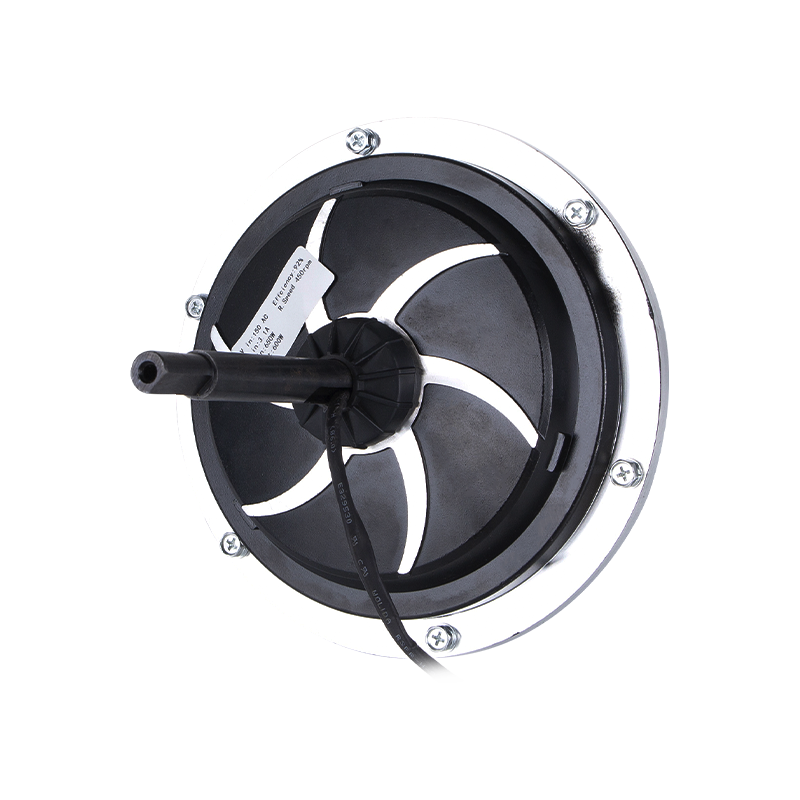 220V 850W External BLDC Air Cooler Motor for High-Power ApplicationsThis 220V BLDC motor delivers 850W output, matching common bus voltages for evaporative coolers. Its high efficiency and external rotor design provide direct torque for large air volume loads, reducing energy costs and maintenance.View Product →
Torque and Speed Range
BLDC motors are especially strong in applications where the load varies. In a fan or a pump, required torque changes with speed and system pressure. The controller can hold the motor at peak efficiency across the operating range, which is a major advantage over an AC induction motor driven at a fixed speed without a VFD.
What a Complete Quotation Should Include
When comparing quotations, request rated voltage, rated power, no-load speed, rated speed, rated torque, and the controller type. It is also useful to know the winding configuration, delta or star, because it affects inverter phase current and the back-EMF constant. A motor that is identical in mechanical outline may behave differently under load depending on those winding details.
Where BLDC Motors Matter in Real Equipment
Direct-Drive Evaporative Air Coolers
Evaporative air coolers benefit significantly from the speed range and high efficiency of BLDC motors. Since the motor is directly coupled to the fan, it can be slowed for night mode or run at full speed in hot weather without pulleys or belt drives. The external rotor design used in many of these motors leaves more space inside the fan housing and allows the fan blades to be mounted directly to the rotor.
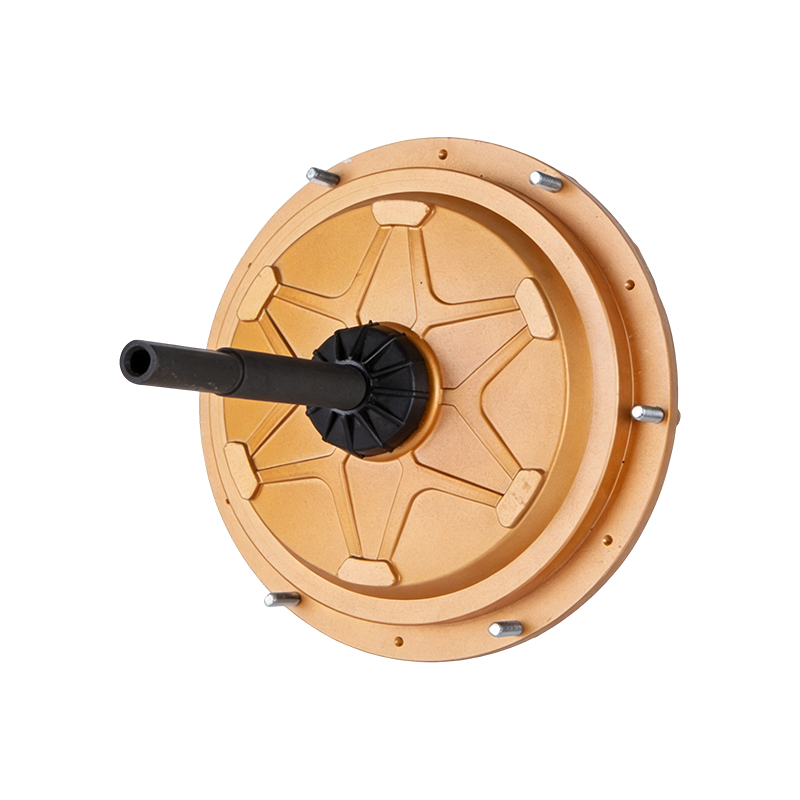
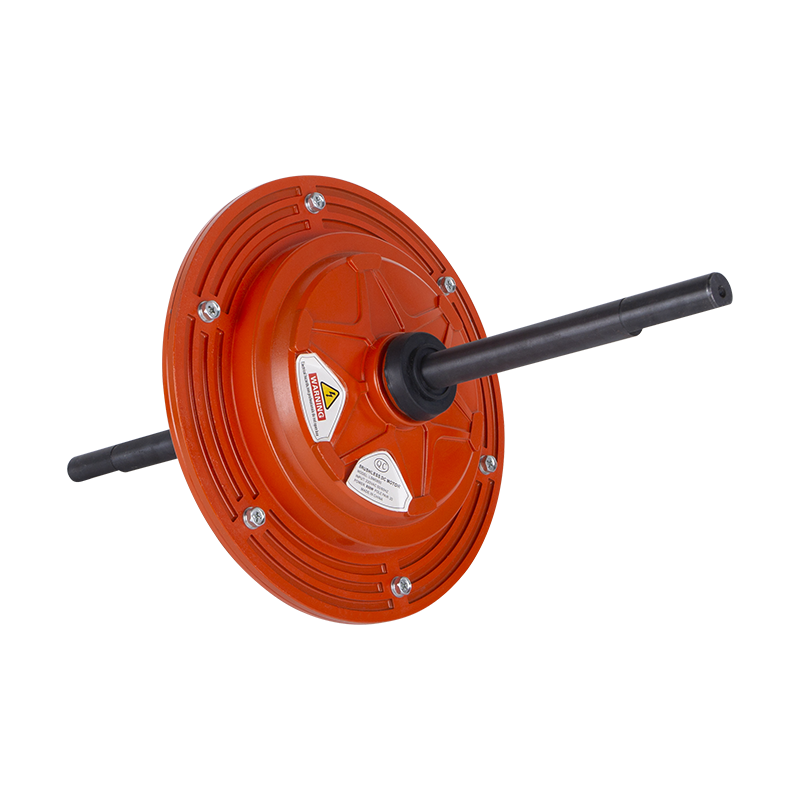
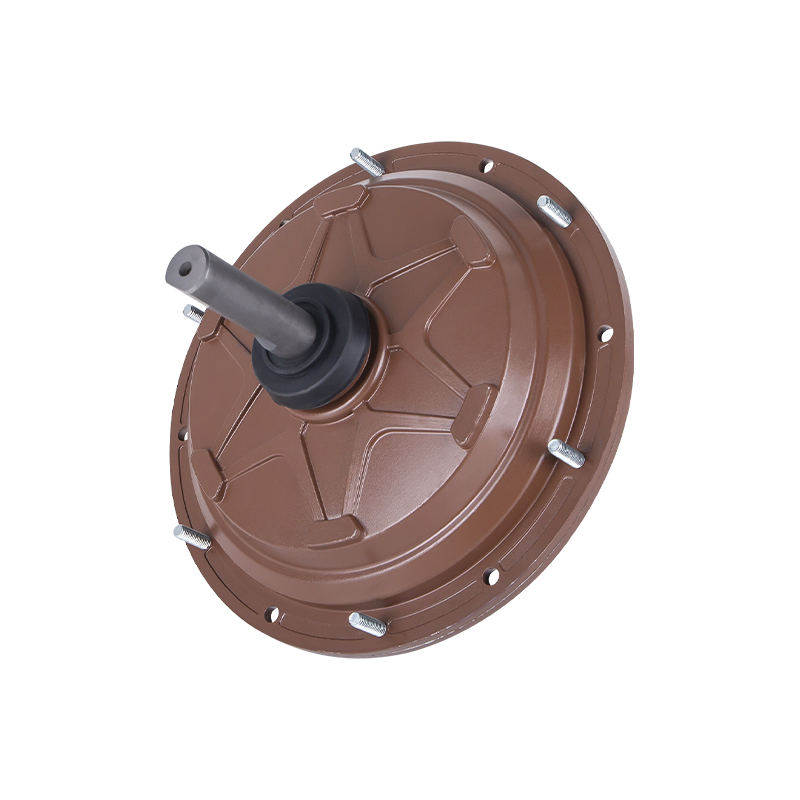
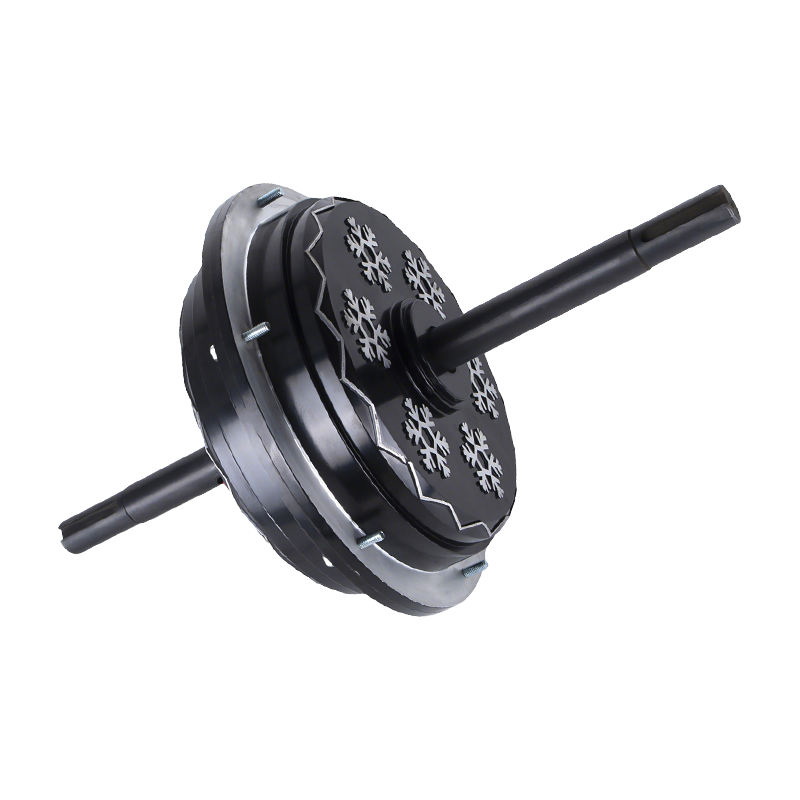
For serial manufacturing of this type of equipment, the external BLDC air cooler motor range from our catalog includes 220 V input options at 600 W, 650 W, 700 W, 850 W, and 1500 W. These are production motors intended for continuous duty in commercial or industrial units. They are not lab prototypes.
EC Fans in Ventilation and Air Handling
EC fans are essentially BLDC motors with an integrated controller. They are widely used in industrial ventilation, air handling units, and heat pump systems because they can monitor their own speed and respond to control signals from a building automation system. The integrated controller saves cabinet space and reduces wiring labor.
For a 220 V single-phase supply, EC fans are typically the most direct retrofit for conventional fan motors. The ECF series in our catalog includes a 350 W 220 V EC fan motor suited for small to medium ventilation equipment where efficiency certification is part of the project requirement.
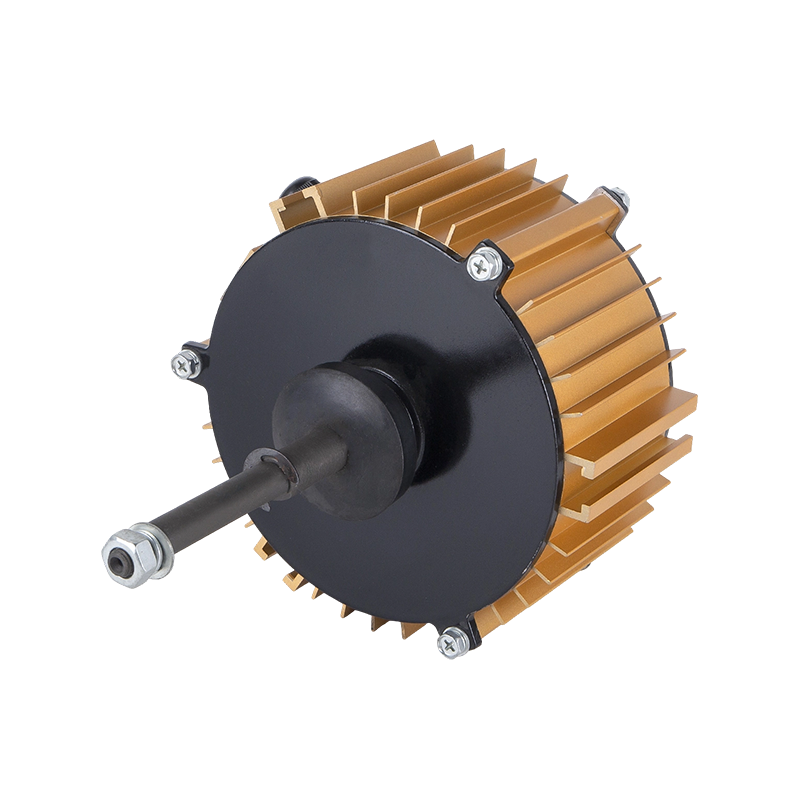 220V 350W EC Fan Motor for Small to Medium Ventilation EquipmentDesigned for 220V single-phase supplies, this EC fan motor offers efficient operation for small to medium ventilation systems. It meets efficiency certification requirements and serves as a direct retrofit for conventional fan motors.View Product →
Concrete Mixers and Other Variable-Load Tools
Concrete mixer motors built on an asynchronous motor family handle the starting torque of a loaded drum, but a BLDC variant adds speed control and lower energy consumption in portable units. The technology is not always the first choice for very low-cost tools. The decision changes when runtime, energy cost, and service intervals are included in the evaluation.
You can read more about external BLDC air cooler motors and their typical specifications in our industry note. For a broader view of where these motors are applied, the air conditioning application section explains how the motor family fits into an industrial cooling system.
A Clear Way to Frame BLDC in Your Specification
When you write a specification document or compare quotations, the safest wording is to describe the motor by both its supply type and its internal architecture. State the source voltage, what the controller outputs, and what kind of machine is expected inside the housing.
A BLDC motor is DC-fed and AC-driven. It uses a DC power bus, converts that bus into three-phase AC through a controller, and drives a permanent magnet synchronous rotor. The name "brushless DC" is a legacy label, not a denial of the AC waveform inside the windings.
That distinction is the key to making the right motor choice. Whether you are building an evaporative cooler, an EC fan, or a portable mixer, the facts that matter are the input voltage, the controller compatibility, and the torque curve. Once those are confirmed, the AC/DC debate mostly disappears.
 Ready To Customise
 Your Motor Products?

We are professional motor manufacturers, delivering powerful, stable, and efficient power cores for all industries through precision craftsmanship and innovation.
Contact Us
-
 Mobile:+86 13575536911
-
 Tel:+86 18357538240
-
 Whatsapp:+8618357538240
-
 Email:betty@dbjxmotor.com
-
 Company Address
Copyright © by Shengzhou Jiangxin Motor Technology Co., Ltd. All Rights Reserved.
Wholesale Industrial Fan Motors Manufacturers
