

 English
 русский
 Español
 عربى
No. 8, Duxiu San Road, Ganlin Town, Shengzhou City, Shaoxing City, Zhejiang Province, China

News Category
Product Category
Are BLDC Motors Waterproof? IP Ratings, Sealing, and Real-World Wet-Duty Limits
Content
- 1 Are BLDC Motors Waterproof? The Short Answer
- 2 Why the Brushless Design Helps in Wet Duty
- 3 Six Places Water Attacks a BLDC Motor
- 4 What IP Ratings Really Promise, and What They Do Not
- 5 How a BLDC Motor Is Actually Made Water-Resistant
- 6 Matching Protection to the Actual Environment
- 7 Condensation: The Failure Mode an IP Rating Does Not Cover
- 8 What to Write Into the Purchase Specification
- 9 The Cost of Over-Specifying Waterproof
- 10 Repair, Replace, or Buy Better: Total Cost of Ownership
- 11 How We Approach Wet-Duty Motors
- 12 A Short Checklist Before You Order
A specifier asked us to quote "a waterproof BLDC motor" for an evaporative cooler. The motor would sit directly in the wet air stream, 220 V, around 850 W, running ten hours a day through a humid summer. In the meeting that followed, "waterproof" turned out to mean five different things to five people: rain-proof, hose-proof, submersible, corrosion-proof, and "it survived last season."
That gap between a word and a requirement is where most wet-duty motor failures are decided, long before the first drop of water reaches a bearing. So let us answer the question directly, then work through where the water actually goes and what it costs to keep it out.
Are BLDC Motors Waterproof? The Short Answer
No standard brushless DC motor is waterproof simply because it is brushless. Two statements are true at the same time:
- A bare, open-frame BLDC motor with a stamped steel shaft, shielded bearings and an exposed Hall sensor board is not waterproof. Splash it daily and it may run for a week, then fail without warning.
- A BLDC motor specified with an IP67 or IP68 enclosure, potted windings, contact-sealed bearings and a sealed cable entry can be submerged, washed down every shift, or mounted in a saturated air stream.
"Brushless" describes how the motor commutates. It says nothing about ingress protection, materials, bearing seals or cable glands. Those are the things that decide whether water gets in.
There is also a middle truth that circulates in hobby forums: an unsealed brushless motor can often be run while submerged, especially at low voltage with sensorless control, because there are no brushes to arc or wear out. That is technically accurate and commercially useless. What you are really buying in that scenario is a short, unpredictable bearing and magnet life, plus a corrosion warranty nobody can enforce. It works for a prototype that gets rinsed in fresh water after a ten-minute run. It does not work for a fan motor that must run 4,000 hours a season in a poultry house.
The useful question is never "is a BLDC motor waterproof?" It is: what does this motor have to survive, for how many years, and what am I willing to pay for that survival?
Why the Brushless Design Helps in Wet Duty
The brushless architecture genuinely has an advantage in wet and humid environments, and it is worth understanding why, because it explains which failures you will no longer see and which ones you will.
No brushes means no arcing at the worst moment
A brushed DC motor commutates mechanically. Every time a brush crosses a commutator segment, contact is made and broken, and a small arc forms. In a clean, dry motor that is manageable. Add moisture, condensation or a conductive dust film, and the arc path becomes a leakage path across the commutator. The motor runs erratically, then shorts. Carbon brush dust makes it worse: it is slightly conductive, it sticks when damp, and it deposits itself exactly at the electrical contact point.
A BLDC motor commutates electronically by switching the stator windings. The rotor carries permanent magnets, the stator carries the windings, and there is no sliding electrical contact inside the housing. That means the winding assembly can be varnished, impregnated or fully potted without losing any mechanical function. It also means there is no wear debris being generated inside the motor, so the internal atmosphere stays cleaner.
Lower losses mean less condensation
Brushless motors are generally more efficient than equivalent brushed motors, so less heat must leave the frame for the same shaft output. A cooler motor cycles through a smaller temperature range, which means less breathing, less condensation on cold windings, and slower ageing of grease, seals and insulation. In a saturated air stream, that difference compounds over years.
But the weak points simply moved
Brushless motors trade brushes for electronics and rare-earth magnets, and both are vulnerable. A Hall-effect sensor that sees moisture produces erratic commutation; the controller then either shuts down or the motor stutters and overheats. Neodymium-iron-boron magnets lose their protective plating to corrosion and then crack and crumble; a magnet that has oxidized cannot be repaired, only replaced together with the rotor. A standard steel bearing with light metal shields will rust in a humid shed even if no visible water ever touches the motor.
So brushless design removes the two failure modes that dominate brushed motors in wet duty, and introduces three that are easier to engineer around, but only if the engineering is actually specified and actually paid for.
Six Places Water Attacks a BLDC Motor
When a wet-duty BLDC motor comes back from the field, the failure is rarely a surprise once the housing is open. The same six locations account for most returns.
| Location | What water does | Typical symptom | Countermeasure |
|---|---|---|---|
| Stator winding and insulation | Moisture plus voids in the varnish creates leakage paths and partial discharge between turns | Falling insulation resistance, nuisance tripping, eventual turn-to-turn short | Double-dip varnish, vacuum pressure impregnation, or full encapsulation |
| Hall sensors and driver board | Surface water or condensation bridges sensor leads and connector pins | Motor stutters, starts in the wrong direction, controller reports a sensor fault | Encapsulated Hall devices with potted harness, conformal coating, or sensorless commutation |
| Bearings | Water displaces or emulsifies grease; races corrode during idle periods | Rising noise, higher current, shaft end-play, then seizure | Contact-sealed bearings, water-resistant grease, stainless or hybrid ceramic balls |
| Permanent magnets | Plating damage lets moisture reach the NdFeB alloy, which expands and cracks | Torque loss, rubbing, metallic debris inside the rotor cavity | Sealed rotor cavity, coated magnets, avoid condensation by design |
| Shaft, housing, fasteners | Rust jacking under flanges, blistering paint, corrosion creep at mating faces | Cosmetic at first, alignment and vibration problems later | Stainless shaft, plated hardware, epoxy or high-corrosion coating system |
| Cable entry and connector | Water wicks along stranded copper inside the jacket, past an unsealed gland | Corrosion inside the terminal box, leakage between phases, intermittent earth faults | Potted cable entry, correctly torqued IP68 gland, drip loop below the gland |
Two patterns are worth noting. First, the electronic and bearing failures usually arrive before the winding fails, so a motor that "still runs" after a wet season is not evidence that it is protected. Second, the riskiest duty is not continuous running in water; it is intermittent running in humid air, where the motor spends long hours cold and wet between shifts.
What IP Ratings Really Promise, and What They Do Not
The IP code comes from IEC 60529 and answers a deliberately narrow question: how well does this enclosure keep solid objects and water out under defined test conditions? The first digit covers solids from 0 to 6; the second covers water from 0 to 9K. For motors, the water digit is the one that matters.
| IP code | Water test behind it | Realistic motor application | Where it stops working |
|---|---|---|---|
| IP54 | Splash from all directions, low pressure | General outdoor fan duty, sheltered mounting | Directed jets, standing water, condensation inside the terminal box |
| IP55 | Water jet, 6.3 mm nozzle, about 12.5 L/min, 3 minutes | Standard washdown duty, poultry house and greenhouse fans | Aged seals, shaft-up mounting, damaged glands |
| IP65 | Same jet test, but dust-tight as well | Dusty and misty environments, evaporative cooler air streams | Immersion, high-pressure cleaning, chemical attack on gaskets |
| IP66 | Powerful jet, 12.5 mm nozzle, about 100 L/min, 3 minutes | Food and process areas with routine hose-down | Steam, hot alkaline cleaners, close-range high-pressure lances |
| IP67 | Immersion, 1 m depth, 30 minutes | Occasional flooding, outdoor pits, wash tunnels | Continuous immersion, pressure cycling, salt water |
| IP68 | Continuous immersion, depth and duration agreed between buyer and maker | Submersible pumps, thrusters, permanently wet installations | No defined depth unless you write one, thermal penalty, no corrosion guarantee |
| IP69K | Close-range high-pressure hot water, roughly 80-100 bar at 80 °C from four angles | Hygienic washdown in food and pharmaceutical equipment | Everything except the cleaning itself; needs stainless hardware and sealed cabling |
Three caveats matter more than the code itself.
The rating belongs to the installed assembly, not to the motor alone. An IP65 motor with the wrong gland, an undersized cable, a missing terminal box gasket or a replacement cover bolt left out is no longer an IP65 motor. It is a motor that carries an IP65 label and behaves like IP23. Whenever a wet-duty failure is investigated, the gland and the cable entry deserve as much attention as the winding.
A rating is a type test, not a lifetime promise. Seals harden, O-rings take a permanent compression set, grease washes out of bearings and the paint film loses adhesion at scratches. A motor that passed IP66 on the day it was made can be IP44 three seasons later.
Ingress protection says nothing about corrosion. Salt spray, ammonia, alkaline cleaners and hard water scale are separate problems with separate solutions: material selection, coating class, varnish chemistry and hardware grade. If you buy by IP code alone, you can still lose a motor to corrosion while every sealing dimension is perfectly in specification.
If your drawings follow North American practice, NEMA 4 and 4X correspond roughly to IP65 and IP66, while NEMA 6 and 6P sit near IP67 and IP68. The test details differ slightly, so do not treat them as interchangeable when a customer, an insurer or a food-safety auditor is involved.
How a BLDC Motor Is Actually Made Water-Resistant
Every protection method is a trade against cost, thermal performance and serviceability. Knowing which lever you are pulling makes the quotation easier to read.
Stator treatment: varnish, VPI, encapsulation
Single-dip varnish fills some of the gaps between magnet wire turns. Vacuum pressure impregnation fills them far more completely and is the normal specification for motors running in wet or humid duty. Full encapsulation with epoxy or polyester resin goes further still: the end turns and slot area become one solid, non-hygroscopic block that moisture cannot penetrate. It adds a little thermal resistance, but in a saturated air stream it is often the difference between a three-year and a ten-year life. For an evaporative cooler or a poultry house exhaust fan, VPI with a resin-coated end winding is a sensible minimum.
Housing and sealing design
Totally enclosed designs are standard for wet areas. A totally enclosed fan-cooled motor circulates internal air and uses an external fan; a totally enclosed non-ventilated motor relies on frame surface area alone. Both depend on gaskets, O-rings and shaft seals rather than vents. The shaft seal is where most designs are won or lost: a lip seal is normal for IP55, a labyrinth seal is usual for heavy washdown, and where a seal cannot be fitted, a slinger disc throws water off the shaft before it reaches the bearing.
Bearings and grease
Metal-shielded bearings are fine for dry duty. For wet duty, specify contact-sealed bearings, a water-resistant lithium-complex or polyurea grease, and, where the budget allows, stainless or hybrid ceramic balls. In coastal installations, hybrid ceramic bearings are frequently cheaper than the downtime of replacing a rusted standard bearing in the middle of a season.
Sensors and commutation
The Hall sensor board is the most common electronic failure in wet motors. There are two honest answers: fully encapsulate the sensor assembly together with its harness, or remove it entirely by using sensorless commutation, which reads back-EMF from the windings. Sensorless control gives up a little accuracy at very low speed and needs a more capable controller, but it deletes a whole failure surface: no sensor, no sensor connector, no sensor wiring, no moisture path into the winding cavity.
Thermal derating
A sealed housing is a worse radiator than an open one. Take an open-frame motor, seal it, and expect the winding rise to increase by 10 to 20 K at the same load. Either derate the motor, typically 5 to 15 percent of rated output for a fully closed frame and more for a potted stator in continuous duty, or specify a higher insulation class and accept a shorter life. Class F insulation with Class B temperature rise is a common way to buy that margin, and it is a legitimate reason to pay more rather than a way to hide a weak design.
Matching Protection to the Actual Environment
Most wet-duty failures come from specifying for the wrong environment: too little protection for a daily washdown, or so much that the motor runs hot and the electronics fail anyway. The mapping below is roughly what we use when quoting.
| Application | Dominant exposure | Practical minimum | Usually fails first |
|---|---|---|---|
| Evaporative cooler, motor in the wet air stream | Near-saturated air, mineral dust, daily on-off cycling | IP44 to IP55, VPI windings, drip-proof frame, corrosion-resistant coating | Bearings, then winding insulation after seasonal cycling |
| Poultry or cattle house exhaust fan | Ammonia, humidity, dust, washdown between flocks | IP55 with sealed terminal box, chemically resistant varnish | Terminal box and sensor wiring; ammonia attacks copper and varnish |
| Greenhouse ventilation | Saturated air, fertilizer salts, condensation at night | IP55, sealed bearings | Shaft seal, then bearing |
| Industrial fan in a wet process | Continuous fine mist, drift from cooling towers | IP55 to IP56 | Shaft seal and bearing |
| Food processing washdown | Daily high-pressure hot water and alkaline cleaners | IP66 to IP69K, stainless hardware, fully potted stator | Cable entry, then paint and label |
| Portable concrete mixer | Rain, cement slurry, hose-down, vibration | IP55 with potted cable entry and sealed bearings | Cable gland and terminal box |
| Marine, ROV or pool thruster | Continuous salt-water immersion | IP68 with agreed depth, sensorless control, ceramic bearings | Bearings within tens of hours if not rinsed in fresh water |
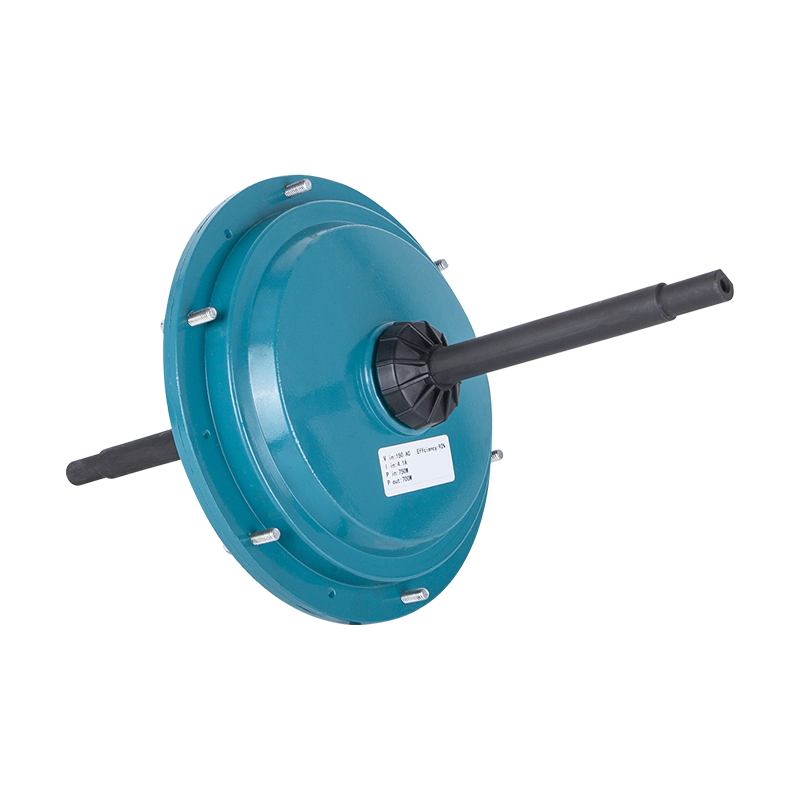
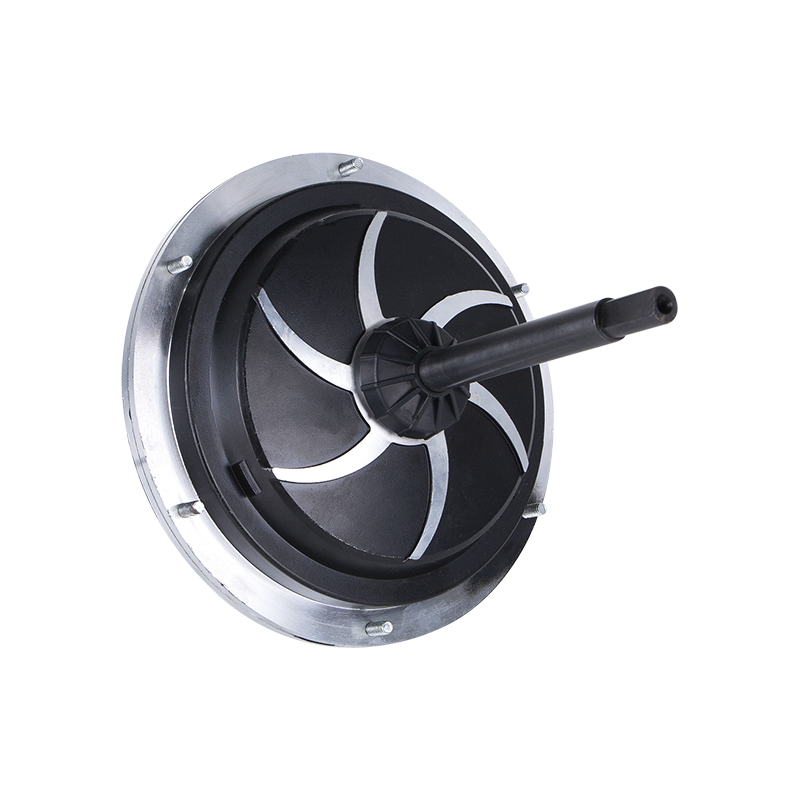
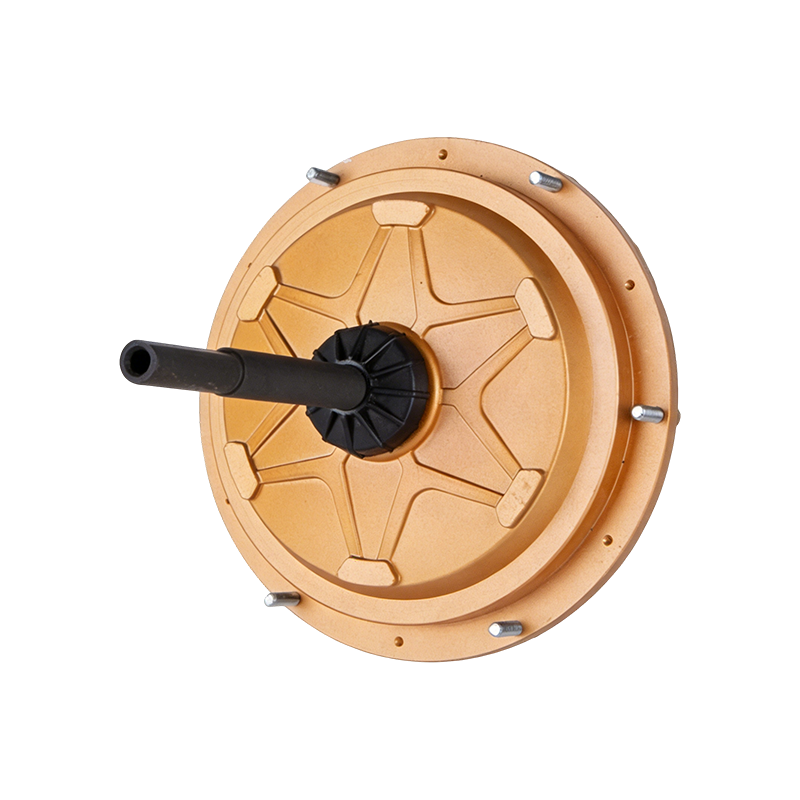
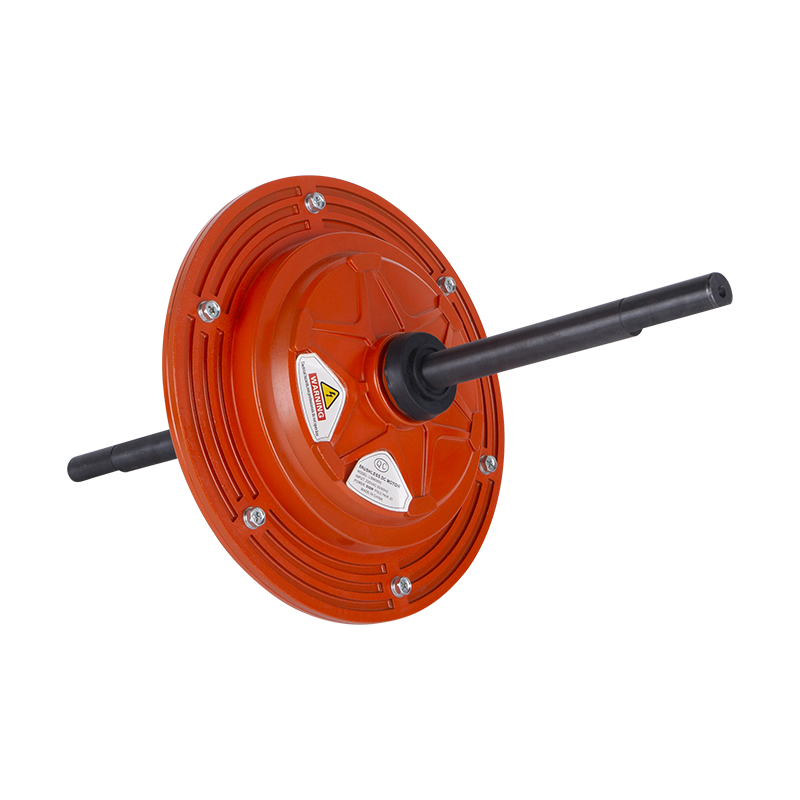
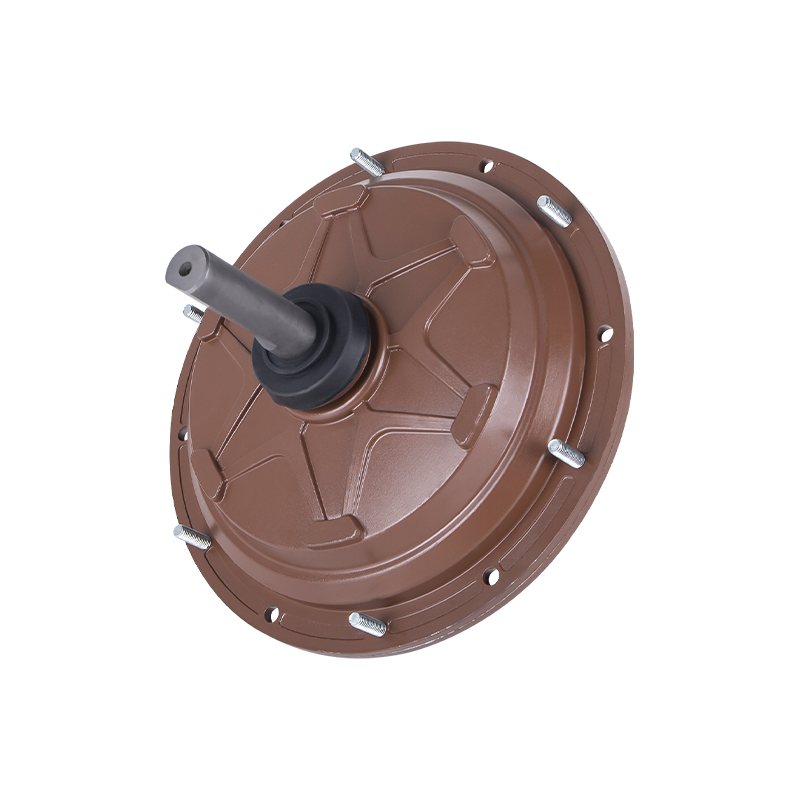
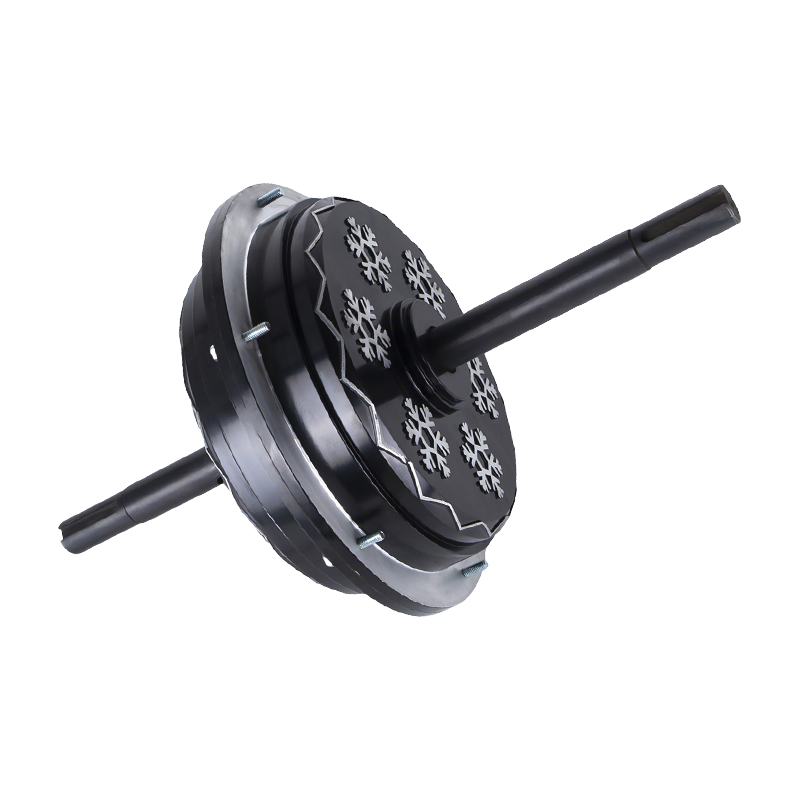
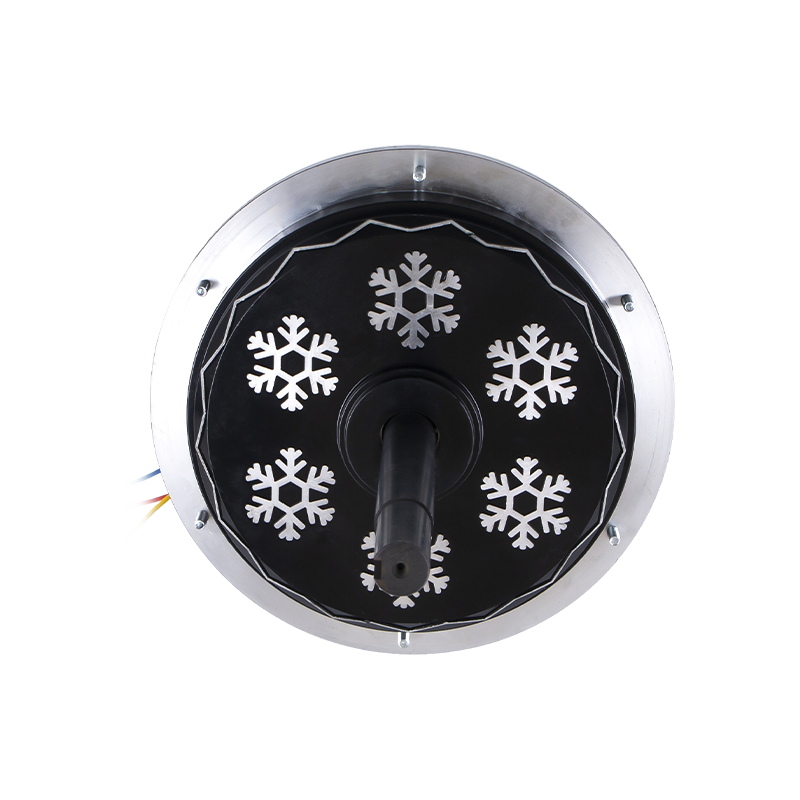
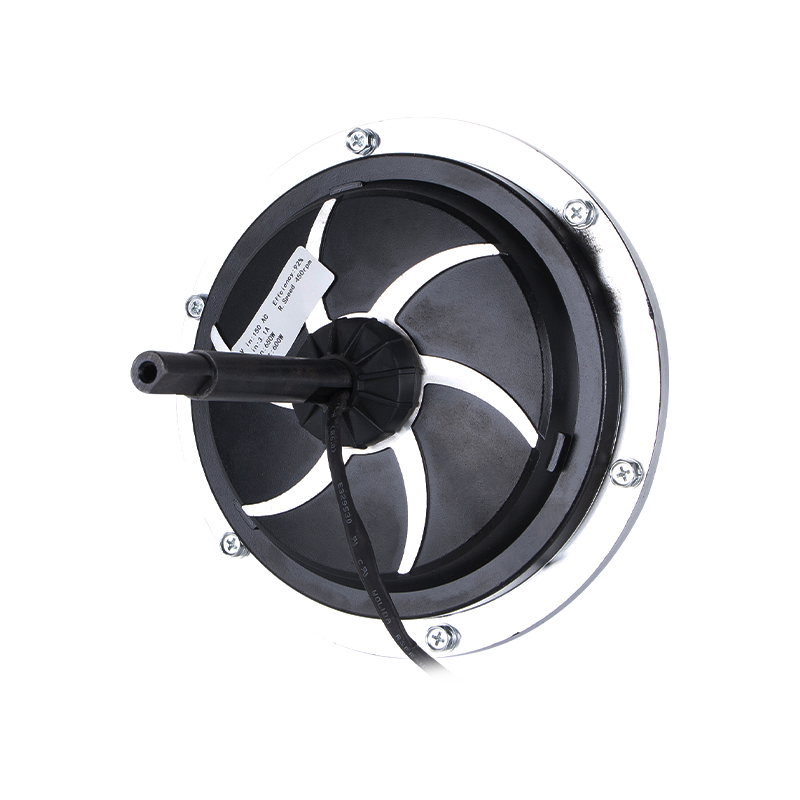
In our own range, the external rotor BLDC air cooler motors are built specifically for that first row: the DC149 platform at 220 V in 600 W, 650 W, 700 W and 850 W, and the DC198 at 220 V and 1500 W. These sit in the wet air stream of evaporative coolers, where the winding treatment and the bearing specification matter far more than the frame finish.
 DC198 220V 1500W External BLDC Air Cooler MotorHigh-power external-rotor BLDC motor for heavy-duty evaporative coolers and large ventilation systems; IP55, Class F, 1500W at 220V, suited to humid, dusty duty.View Product →
For ventilation systems that see mist, condensate or occasional washdown, the EC fan motor and standard air cooler motor families cover 220 V / 350 W up to 380 V / 2200 W, and the same sealing logic applies: pick the protection level from the environment table, not from a habit of buying the most expensive option on the list.
Condensation: The Failure Mode an IP Rating Does Not Cover
A motor in a humid shed cools overnight. Air inside the housing contracts, and if the enclosure is not perfectly sealed, damp air is drawn in along the cable strands and past the gland. By morning the winding is wet. The motor may run perfectly when hot and refuse to start after a cold, damp weekend, which is the classic signature of condensation rather than direct water ingress.
This is why intermittent duty is harder on a motor than continuous duty. Several practical measures help:
- Fit a membrane breather plug, such as an expanded PTFE vent, so the housing can equalize pressure without admitting liquid water.
- Install an anti-condensation heater or a small space heater in the terminal box for motors that stand idle for long periods.
- Keep drain holes clear at the lowest point of the frame. Painting over them during a maintenance touch-up is a common site error, and it converts a protected motor into a water trap.
- Mount the motor with the terminal box below the shaft axis and form a drip loop in the cable below the gland, so water runs off rather than into the entry.
- In coolers, run the fan for a minute or two after the water pump stops so the winding dries while the motor is still warm.
A fully sealed IP68 motor is not automatically immune either. Whatever moisture was trapped at assembly stays inside, and a single small leak becomes permanent. If you need both a high ingress rating and condensation control, say so at the quotation stage; it changes the breather design, the potting compound and sometimes the frame geometry.
What to Write Into the Purchase Specification
Most disputes about wet-duty motors are arguments about wording rather than about manufacturing quality. These items should be explicit in any order for a motor that will meet water, mist or washdown.
- The required ingress protection class, quoted with the test standard and the as-installed configuration, including gland and cable.
- Evidence: an IEC 60529 type test report, or at minimum a routine test record for insulation resistance and dielectric strength.
- An insulation resistance acceptance criterion, for example 100 megohms or better measured at 500 V DC before and after a humidity soak.
- Dielectric withstand conditions, typically 1500 V AC at 50/60 Hz for one minute, with the trip current stated.
- Insulation class and permitted temperature rise, plus whether the rating assumes continuous or intermittent duty and at what ambient.
- Bearing type by full designation, grease specification, and whether bearings can be replaced in the field.
- Shaft seal type and shaft material, since a stainless shaft changes both corrosion life and price.
- Commutation method: sensorless or Hall, and if Hall, whether the sensors are encapsulated.
- Winding treatment level: single dip, double dip, vacuum pressure impregnation, or full encapsulation.
- Cable length, type and gland rating, and whether the cable is supplied and potted by the motor maker.
- Coating class and hardware material, especially for coastal, poultry and food environments.
- The mounting orientation assumed in the rating. A motor rated for jets with the shaft horizontal may not be protected with the shaft pointing up in your installation.
- Routine tests: no-load current, insulation resistance, high-potential test, vibration check and a short run-in.
Then test a sample rather than trusting the paperwork. A two-week soak with insulation resistance measured daily costs almost nothing and exposes most design weaknesses. Salt spray testing to ISO 9227 with a 5 percent sodium chloride solution is worth the lead time for coastal sites. Thermal cycling between running temperature and ambient temperature reveals condensation behaviour far better than any static immersion test, because it reproduces the breathing cycle that actually destroys motors in the field.
The Cost of Over-Specifying Waterproof
Over-specification is not a safe default. A fully potted IP68 motor may run 15 to 25 K hotter than an open equivalent at the same load, which ages the winding faster and weakens the magnets over time. You can pay more for protection and still get a shorter life, and you will also get a motor that is difficult or impossible to rewind should it fail for any other reason. Lead times stretch as well, and a defined immersion specification can add a substantial premium to unit price.
If the real exposure is a monthly hose-down in a sheltered plant room, IP55 with a properly torqued gland will do the job for years. Save the encapsulation budget for the evaporative cooler where the winding lives in saturated air.
Under-specification is worse, because it fails slowly and at the worst moment. The failure is usually not dramatic: it is a gradual rise in running current and a nuisance trip during the hottest week of the year, when the production line, the greenhouse or the poultry house cannot afford to stop. In a livestock building in midsummer, a failed exhaust fan is not a maintenance ticket; it is a flock welfare event. That asymmetry is why the protection level should be chosen from the worst realistic week of the year, not from the average.
Repair, Replace, or Buy Better: Total Cost of Ownership
When a wet-duty BLDC motor fails, three options compete.
Rewinding is often possible if the rotor is intact, and for a large motor it may be the cheapest route. But if the magnets have corroded, a rewind buys you nothing: the rotor is the expensive part, and no amount of new copper will restore magnet strength. Bearings can be replaced in the field on motors with exposed bearing housings and standard frame sizes; on some fully sealed designs they cannot be reached without cutting the housing, which turns a field repair into a factory rebuild.
Interchangeability is the quiet cost. A motor that is IP55 today but whose seal design changes next year is a supply risk, so ask for the design to be frozen, keep a golden sample, and record the gland type and torque. Holding two percent of installed motors as spares on the shelf is usually cheaper than expediting a special sealed unit across a border in July.
For equipment builders, the arithmetic is simple. The motor is often one of the least expensive components on the bill of materials but one of the most frequent warranty claims in wet environments. Paying the difference at the design stage is cheaper than paying it at the claims stage, and much cheaper than the reputation cost of a fan that stops in a customer's installation.
How We Approach Wet-Duty Motors
We manufacture AC and DC motors and micro motors in Shengzhou, in Zhejiang province, at the centre of one of China's densest motor manufacturing clusters, and we have held ISO 9001 certification since 2014. Our motors ship to customers in more than 60 countries, mostly into environmental equipment, industrial ventilation and hydraulic systems. Two of our families are directly relevant here:
- External rotor BLDC air cooler motors, covering the wet air stream duty described above, from 600 W to 1500 W at 220 V.
- EC fan motors, evaporative air cooler motors, cattle house fan motors, fiberglass fan motors and concrete mixer motors, covering ventilation, cooling and small mixing equipment where mist, condensate or hose-down is normal.
 DC149 220V 850W External BLDC Air Cooler Motor850W external-rotor BLDC motor for high-power air coolers, offering 85%–95% efficiency, stepless speed regulation, IP55/Class F protection and long maintenance-free service.View Product →
For OEM projects we build to a stated ingress class rather than to a generic "waterproof" claim, and insulation resistance is a routine inspection item rather than a special request. Where noise matters as much as moisture, the low-noise BLDC motor range uses the same winding treatment and bearing practice. On low-voltage systems, the 12 V DC air cooler motor platform follows the same sealing logic at a smaller frame size.
 ECF160 380V 1500W EC Fan Motor for Evaporative CoolersHigh-efficiency EC fan motor for evaporative air coolers, with 380V 1500W output, quiet brushless operation, IP55/Class F protection and 30,000–50,000-hour service life.View Product →
One caveat we repeat to every customer: we can build the motor to a protection class, but we cannot control how it is installed. If the gland is loose, the cable comes up into the terminal box, or the drain hole gets painted over, the rating on the label will not describe the motor you actually have on the wall.
A Short Checklist Before You Order
- Write down the worst-case exposure: jet, splash, immersion, vapour, salt, or chemical.
- Convert that exposure into an IP class, and add a depth and duration if immersion is involved.
- Confirm that the gland, cable and connector are inside the rated assembly.
- Decide how the motor stays dry when it is not running.
- Specify winding treatment, bearing type and sensor strategy in writing.
- Require routine test data: insulation resistance, high-potential test, no-load current.
- Soak a sample and measure insulation resistance daily before placing the volume order.
- Freeze the design so next year's shipment is the same motor you qualified.
The honest answer to the original question is that the motor architecture is only half the story. Brushless commutation removes the brushes, the commutator and the arcing, which is a genuine advantage in wet duty. But the winding, the bearings, the magnets, the sensors and the cable entry still have to be designed around the water they will actually meet. Decide where the motor will stand, what will hit it and how often; then choose the protection class, the impregnation method and the bearings to match. That decision, and not the label on the nameplate, is what determines whether the motor lasts three seasons or ten years.
 Ready To Customise
Your Motor Products?

We are professional motor manufacturers, delivering powerful, stable, and efficient power cores for all industries through precision craftsmanship and innovation.
Contact Us
-
 Mobile:+86 13575536911
-
 Tel:+86 18357538240
-
 Whatsapp:+8618357538240
-
 Email:betty@dbjxmotor.com
-
 Company Address
Copyright © by Shengzhou Jiangxin Motor Technology Co., Ltd. All Rights Reserved.
Wholesale Industrial Fan Motors Manufacturers
