

 English
 русский
 Español
 عربى
عربى

No. 8, Duxiu San Road, Ganlin Town, Shengzhou City, Shaoxing City, Zhejiang Province, China

News Category
Product Category
How to Choose the Right Air Cooler Motor for Any Application?
Content
- 1 Motor Size and Type for an Air Cooler
- 2 Which Motor Is Used in an Air Cooler?
- 3 What Size Motor Do I Need for an Air Cooler?
- 4 Key Specifications to Check on Any Air Cooler Motor Nameplate
- 5 How to Replace an Air Cooler Motor: Practical Steps
- 6 Upgrading to a Better Air Cooler Motor: What Differences Are Worth Paying For
- 7 Frequently Asked Questions
- 7.1 1. What size motor do I need for an air cooler in a 300 square foot room?
- 7.2 2. Which motor is used in an air cooler for most household models?
- 7.3 3. Can I use a higher-wattage motor to get more cooling from my air cooler?
- 7.4 4. What causes an Air Cooler Motor to hum but not start?
- 7.5 5. How many RPM should an Air Cooler Motor run at?
- 7.6 6. Does the Air Cooler Motor also run the water pump?
- 7.7 7. What is the difference between a 4-pole and a 6-pole Air Cooler Motor?
- 7.8 8. How long does an Air Cooler Motor typically last?
- 7.9 9. Can I replace a 220V Air Cooler Motor with a 110V motor?
- 7.10 10. What IP rating should an Air Cooler Motor have?
Motor Size and Type for an Air Cooler
Most residential air coolers use a single-phase capacitor-run induction motor rated between 80 watts and 250 watts. Small personal coolers (covering 150 to 300 square feet) typically use an Air Cooler Motor in the 80 to 120 watt range. Medium household coolers (covering 300 to 600 square feet) use motors from 125 to 185 watts. Large desert or industrial coolers (covering 600 to 1,500 square feet or more) require motors from 200 to 750 watts or higher.
The motor type used in virtually all air coolers sold for residential and light commercial use is the single-phase capacitor-run induction motor, also known as a permanent split capacitor (PSC) motor. It is the dominant choice because it runs quietly, requires no brushes, tolerates high-humidity environments, and delivers consistent speed with low energy consumption. Understanding both the correct motor size and the correct motor type prevents common mistakes: underpowered motors that overheat and fail prematurely, and oversized motors that waste electricity and generate excess noise.
Which Motor Is Used in an Air Cooler?
The question of which motor is used in an air cooler has a clear answer for the vast majority of products on the market, but the full picture includes several motor technologies used in different segments and applications. Knowing the distinctions helps when replacing a failed motor, upgrading an existing cooler, or specifying a motor for a custom build.
Single-Phase Capacitor-Run Induction Motor (PSC Motor)
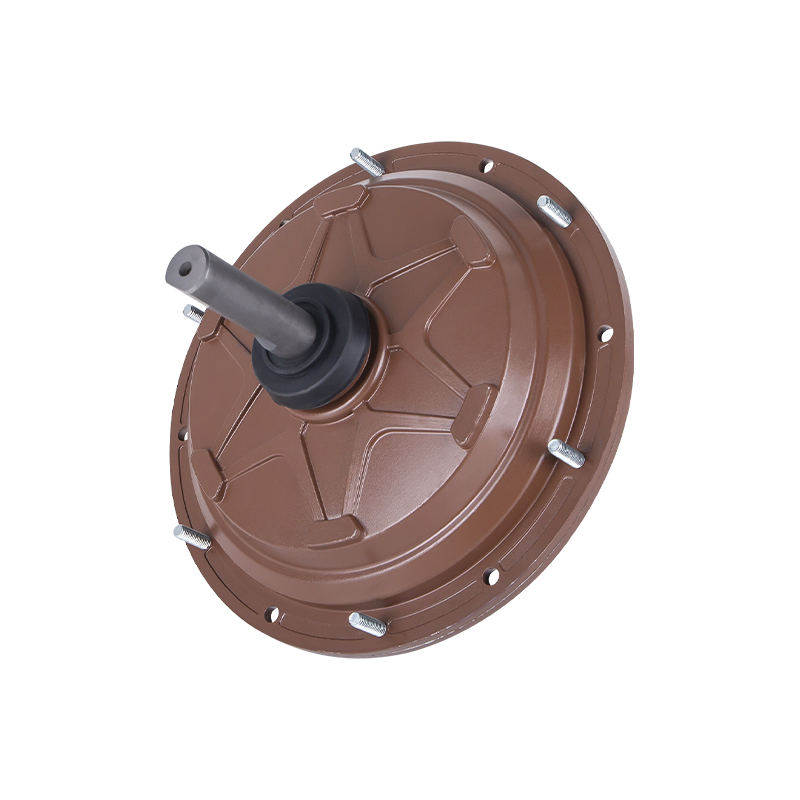
This is the standard Air Cooler Motor in residential and commercial evaporative coolers worldwide. The PSC motor uses a run capacitor permanently connected in series with the auxiliary winding to create a phase shift that produces continuous, smooth rotation. Key performance characteristics:
- Power range: 80 watts to 750 watts for air cooler applications
- Speed: typically 800 to 1,450 RPM depending on the number of poles and supply frequency (50 Hz or 60 Hz)
- Supply voltage: 110V to 240V single-phase AC, matching standard household outlets in all regions
- Efficiency: 60% to 75% at rated load, which is adequate for intermittent cooler use
- Noise level: low, typically 35 to 52 dB(A) at 1 meter when properly balanced
- Service life: 8,000 to 20,000 hours with proper lubrication and clean operating environment
The PSC Air Cooler Motor drives two loads simultaneously in most cooler designs: the fan or blower assembly that moves air through the cooler pads, and a small water pump (usually a separate low-wattage submersible pump, though some older single-motor designs use a belt-driven pump off the main motor shaft). The main motor shaft connects directly to the fan hub via a set screw or keyway, making replacement straightforward.
Single-Phase Capacitor-Start Induction Motor
Capacitor-start motors use a starting capacitor that disconnects after the motor reaches approximately 75% of rated speed. They produce higher starting torque than PSC motors, which makes them suitable for large industrial evaporative coolers where the fan and drive system are heavy and require more force to begin rotating from a standstill. These motors are found in coolers rated above 500 watts and in coolers with belt-drive systems connecting the motor to the fan pulley. They are less common in modern direct-drive residential coolers because the starting capacitor adds a component that can fail and because PSC motors provide adequate starting torque for direct-drive fan assemblies.
Brushless DC (BLDC) Motor in Modern Coolers
A growing segment of premium and inverter-based air coolers now uses brushless DC motors for the fan drive. BLDC Air Cooler Motors offer significantly higher efficiency (typically 85% to 92% compared to 60% to 75% for PSC motors), variable speed control through the integrated electronic controller without needing a separate speed regulator, and longer service life (rated at 30,000 to 50,000 hours due to the absence of brushes and mechanical commutators). The trade-off is higher initial cost: a BLDC motor and its controller cost approximately 2 to 4 times more than an equivalent PSC motor. BLDC motors are becoming standard in inverter-rated coolers and in premium brands where energy efficiency and quiet operation are marketing priorities.
Shaded-Pole Induction Motor (Small Coolers Only)
Very small personal evaporative coolers and desktop units sometimes use a shaded-pole induction motor rated at 15 to 50 watts. Shaded-pole motors are the simplest and cheapest AC induction motor design, with no capacitor and no starting winding, but they are extremely inefficient (typically 20% to 35% efficiency) and produce relatively high noise for their output. They are only acceptable in the smallest cooler applications where the motor runs for short periods and low cost is the primary driver.
| Motor Type | Typical Power Range | Efficiency | Best Application | Relative Cost |
|---|---|---|---|---|
| PSC (capacitor-run) induction | 80W to 750W | 60% to 75% | Most residential and commercial coolers | Low |
| Capacitor-start induction | 370W to 1,500W | 65% to 78% | Large industrial belt-drive coolers | Low to moderate |
| Brushless DC (BLDC) | 50W to 400W | 85% to 92% | Premium and inverter coolers | High |
| Shaded-pole induction | 15W to 50W | 20% to 35% | Desktop and personal mini coolers | Very low |
What Size Motor Do I Need for an Air Cooler?
Motor size for an air cooler is determined primarily by the airflow requirement (measured in CFM, cubic feet per minute) of the space being cooled, which in turn is determined by the room volume, the desired air changes per hour, and the static pressure the motor must overcome to push air through the wet cooling pads. Using the correct size Air Cooler Motor is not just about cooling effectiveness: an undersized motor runs at or beyond its thermal limits, shortening its life dramatically, while an oversized motor costs more, consumes unnecessary electricity, and often produces excessive noise and airflow turbulence.
Step 1: Calculate the Required Airflow in CFM
The standard rule for evaporative cooler sizing is to achieve 20 to 40 air changes per hour (ACH) in the cooled space, with 30 ACH being the typical target for comfortable cooling in hot, dry climates. The formula is straightforward:
Required CFM equals room volume (in cubic feet) multiplied by target ACH, divided by 60 minutes.
For a room measuring 20 feet by 15 feet with an 8-foot ceiling, the volume is 2,400 cubic feet. At 30 ACH, the required airflow is 2,400 times 30, divided by 60, which equals 1,200 CFM. This is the airflow target that the Air Cooler Motor and fan assembly must deliver together.
Step 2: Match CFM to Motor Power
The relationship between motor power (watts) and delivered airflow (CFM) depends on fan blade diameter, blade pitch, and system static pressure (resistance from the wet pads). The following general relationships apply to typical residential evaporative cooler designs with direct-drive centrifugal or axial fans:
- 80 to 120 watts: delivers approximately 600 to 900 CFM in a direct-drive design. Suitable for small rooms of 150 to 250 square feet.
- 125 to 185 watts: delivers approximately 900 to 1,500 CFM. Suitable for medium rooms of 250 to 450 square feet.
- 185 to 250 watts: delivers approximately 1,500 to 2,500 CFM. Suitable for large living areas of 450 to 700 square feet.
- 250 to 375 watts: delivers approximately 2,500 to 4,000 CFM. Suitable for large open areas, workshops, or small commercial spaces of 700 to 1,200 square feet.
- 375 to 750 watts: delivers approximately 4,000 to 8,000 CFM. Industrial and large commercial applications, warehouses, factories, or outdoor event areas.
Step 3: Account for Static Pressure from Cooling Pads
Wet cooling pads create resistance to airflow that the motor must overcome. This resistance is measured in inches of water column (in. W.C.) and is called static pressure. Standard cellulose honeycomb pads of 100mm thickness create approximately 0.1 to 0.2 in. W.C. of resistance. Thicker rigid media pads of 150mm depth create 0.3 to 0.5 in. W.C. The motor and fan must be capable of delivering the target CFM at the system's operating static pressure. When replacing an Air Cooler Motor, check the original motor's nameplate for rated static pressure or use the pad manufacturer's resistance data to confirm the replacement motor is capable of the same system curve.
Step 4: Consider Voltage, Frequency, and Speed Requirements
An Air Cooler Motor must match the electrical supply available at the installation site. Key parameters to verify before purchasing any replacement or upgrade motor:
- Supply voltage: 110V to 120V (North America), 220V to 240V (most of Asia, Europe, Middle East, Africa, Australia). Motors are not interchangeable between these voltage ranges without a transformer.
- Frequency: 60 Hz (North America, parts of South America) or 50 Hz (most of the rest of the world). A 60 Hz motor running on 50 Hz supply runs approximately 17% slower than rated speed, reducing airflow and potentially causing overheating. Always match frequency.
- Speed (RPM): cooler fan motors typically run at 1,400 to 1,450 RPM on 50 Hz supply or 1,700 to 1,750 RPM on 60 Hz supply for a 4-pole motor. Some coolers use 6-pole motors running at 950 to 960 RPM on 50 Hz for quieter operation at slightly lower airflow.
- Capacitor rating: the PSC Air Cooler Motor requires a run capacitor, typically rated at 2 µF to 8 µF at 400V or 450V AC. Always replace the capacitor with one of identical capacitance and voltage rating when servicing the motor.
| Room Area (sq ft) | Room Volume (8 ft ceiling, cu ft) | Required CFM (30 ACH) | Recommended Motor Wattage | Typical Application |
|---|---|---|---|---|
| 100 to 200 | 800 to 1,600 | 400 to 800 | 80 to 120W | Bedroom, small office |
| 200 to 400 | 1,600 to 3,200 | 800 to 1,600 | 125 to 185W | Living room, medium hall |
| 400 to 700 | 3,200 to 5,600 | 1,600 to 2,800 | 185 to 250W | Open plan apartment, restaurant |
| 700 to 1,200 | 5,600 to 9,600 | 2,800 to 4,800 | 250 to 375W | Workshop, retail store |
| 1,200 to 2,500+ | 9,600 to 20,000+ | 4,800 to 10,000+ | 375 to 750W+ | Warehouse, factory, events venue |
Key Specifications to Check on Any Air Cooler Motor Nameplate
Every Air Cooler Motor has a nameplate attached to the motor body listing its critical operating parameters. Reading this nameplate correctly is essential when replacing a motor or verifying that a replacement part matches the original. The following specifications appear on most motor nameplates and each has a specific meaning for cooler performance.
Rated Power (Watts or HP)
Rated power is the continuous output power the motor delivers at its shaft under full design load. For an Air Cooler Motor, this equals the mechanical power needed to spin the fan at rated speed against the system static pressure. Common residential cooler motor ratings are 80W, 100W, 125W, 150W, 180W, and 200W. Industrial coolers use 250W, 370W (0.5 HP), 550W (0.75 HP), and 750W (1 HP) motors. When replacing, match the rated power exactly: do not substitute a 150W motor for a 125W original without verifying that the fan, shaft size, mounting dimensions, and operating speed are also compatible.
Rated Speed (RPM)
Speed determines the airflow and noise level of the cooler. A higher-speed motor moves more air but generates more noise and requires a more precisely balanced fan assembly to avoid vibration. For residential coolers, 1,400 to 1,450 RPM on 50 Hz supply is the standard range for 4-pole PSC motors. Some manufacturers use 850 to 960 RPM (6-pole design) for quieter bedroom and personal coolers. Industrial belt-drive systems may use a motor running at 1,450 RPM connected to a large fan pulley with a speed ratio that reduces the fan speed to 300 to 600 RPM, allowing very large fan diameters without excessive blade tip speed.
Capacitor Rating
The run capacitor of a PSC Air Cooler Motor is critical to its performance. The capacitor creates the phase shift in the auxiliary winding that produces rotation. A wrong capacitor value causes the motor to run hotter than designed, reduces efficiency, and shortens service life. Typical values for residential cooler motors are 3 µF to 6 µF at 400V or 450V AC. Larger industrial motors may use capacitors of 8 µF to 20 µF. Always replace a failed capacitor with one rated at exactly the same capacitance and at least the same voltage rating. Using a higher capacitance value causes overheating of the auxiliary winding; using a lower value reduces starting torque and running efficiency.
Insulation Class and Thermal Protection
The insulation class indicates the maximum operating temperature the motor windings can safely sustain. Class B insulation (common in standard residential coolers) is rated to 130°C. Class F insulation (used in better-quality coolers and all industrial cooler motors) is rated to 155°C. When a cooler is used in a very hot environment or runs continuously for long periods, a Class F insulated Air Cooler Motor provides significantly greater margin against winding failure. Many modern cooler motors also include built-in thermal protection: a bimetallic switch that opens the circuit if winding temperature exceeds a safe threshold and resets automatically when the motor cools, preventing permanent damage from overloads or blocked airflow.
Ingress Protection (IP) Rating
Air coolers operate in high-humidity environments and may be exposed to water mist from the cooling pads. The motor enclosure must be rated appropriately. A minimum IP44 rating (protected against solid particles larger than 1 mm and against water splashing from any direction) is required for any Air Cooler Motor in direct contact with humid airflow. Motors mounted in positions where they could receive direct water spray (such as in the airstream just downstream of the pads in some designs) should have an IP54 or IP55 rating. A motor with an inadequate IP rating will experience premature bearing corrosion and winding insulation breakdown from moisture ingress.
How to Replace an Air Cooler Motor: Practical Steps
Replacing an Air Cooler Motor is a straightforward task that most technically capable homeowners can complete in 30 to 60 minutes with basic tools. The critical steps are matching the replacement motor specifications exactly, correctly handling the capacitor, and ensuring the fan is properly secured before testing.
Tools and Parts Required
- Screwdrivers (flat and Phillips), adjustable wrench or socket set
- Multimeter for verifying winding continuity and capacitor condition
- Replacement Air Cooler Motor with matching rated power, voltage, frequency, speed, shaft diameter, and mounting dimensions
- Replacement capacitor matching original capacitance and voltage rating
- Thread-locking compound for the fan set screw
Replacement Procedure
- Disconnect the power supply to the cooler completely. Do not rely on the cooler's power switch alone; unplug the unit or switch off the circuit breaker supplying the cooler outlet.
- Discharge the capacitor before touching any wiring. A charged capacitor retains dangerous voltage even after the power is disconnected. Use a discharge tool or a resistor of approximately 10,000 ohms (10 kilohms) connected across the capacitor terminals for 10 to 15 seconds before proceeding.
- Photograph all wiring connections before disconnecting any wires. Note the color of each wire and the terminal it connects to on both the motor and the capacitor.
- Remove the fan from the motor shaft by loosening the set screw or nut securing the fan hub to the shaft. Mark the position of the fan on the shaft to ensure it is reinstalled at the same depth (affecting blade tip clearance inside the cooler housing).
- Unmount the motor from its bracket by removing the mounting bolts. Note the orientation of the motor (shaft direction, terminal box position) for correct reinstallation of the replacement.
- Mount the replacement motor in the same position and orientation as the original. Verify that the shaft protrudes to the same length and in the same direction to allow the fan to be reinstalled without modification.
- Reinstall the fan at the same depth marked during removal. Apply thread-locking compound to the set screw and tighten to the manufacturer's specified torque, or to a snug firm tightness if no specification is available. A loose fan set screw is a common cause of vibration and fan contact with the cooler housing.
- Reconnect all wiring per the photograph taken in step 3. Connect the new capacitor with the same polarity and wiring arrangement as the original. Ensure all connections are tight and that no bare wire ends are exposed.
- Test before full reassembly by reconnecting power briefly and verifying that the motor starts and runs smoothly in the correct direction (confirm airflow is toward the inside of the cooler, through the pads), that there is no excessive vibration or unusual noise, and that the motor does not feel abnormally hot after 5 minutes of running. Then complete final housing reassembly.
Common Failure Modes and Their Causes
Understanding why an Air Cooler Motor fails helps prevent recurrence after replacement. The most common failure modes are:
- Capacitor failure: the most frequent cause of a motor that hums but does not start, or that runs slowly and draws high current. Capacitors degrade over 5 to 10 years from heat cycling. Always replace the capacitor whenever replacing the motor.
- Bearing failure: causes progressive increase in motor noise, vibration, and eventually seizure. Caused by normal wear (5 to 15 year service life), moisture ingress (inadequate IP rating), or insufficient lubrication in older open-bearing designs. Many modern Air Cooler Motors use sealed, pre-lubricated bearings that require no maintenance.
- Winding burnout: caused by prolonged operation with a failed capacitor (causing high current in the auxiliary winding), clogged cooling pads that reduce airflow through the motor, or supply voltage substantially below the rated value. A burned winding produces a distinct acrid electrical smell and shows open circuit on multimeter winding resistance test.
- Moisture damage to windings: results from inadequate motor IP rating or from water leaking into the motor from a failed or clogged water distribution system in the cooler. Presents as intermittent operation or persistent tripping of the thermal protector.
Upgrading to a Better Air Cooler Motor: What Differences Are Worth Paying For
When an Air Cooler Motor fails and a direct replacement is needed, it is worth considering whether an upgrade to a better-specification motor is cost-effective. The following improvements offer meaningful real-world benefits.
Class F Insulation Over Class B
In hot climates where air coolers operate for 10 to 16 hours per day during summer, winding temperature is the primary driver of motor aging. Class F insulation (rated to 155°C versus 130°C for Class B) provides a 25°C additional thermal margin. According to the Arrhenius aging model for insulation, this additional margin roughly doubles the insulation service life at equivalent operating temperatures, extending expected motor life from 8 to 12 years to 15 to 20 years in typical residential service. The price premium for a Class F rated Air Cooler Motor is typically only 10 to 20% over an equivalent Class B unit, making it an excellent value in hot climates.
Sealed Bearings Over Open Bearings
Older cooler motors used open ball bearings or sleeve bearings that required periodic oiling through external oil ports. Modern motors with factory-sealed, permanently lubricated bearings eliminate this maintenance task entirely and provide better resistance to moisture and dust ingress from the cooler airstream. When replacing an older open-bearing motor, choosing a sealed-bearing replacement is always recommended regardless of whether it was the original bearing type.
Higher IP Rating for Humid Environments
In regions with high ambient humidity or where the cooler is used near a swimming pool, garden, or other wet area, upgrading from IP44 to an IP55 rated Air Cooler Motor extends service life significantly. The total cost difference between an IP44 and an IP55 motor of the same power rating is typically $5 to $25, which is negligible compared to the labor cost of a premature motor replacement.
BLDC Motor Upgrade for Energy Efficiency
For coolers used many hours per day, upgrading from a PSC induction motor to a BLDC motor can reduce the motor's energy consumption by 25% to 35% at equivalent airflow output. For a 150W PSC motor running 12 hours per day for 150 days per year, annual energy consumption is approximately 270 kWh. A BLDC replacement delivering the same airflow at 100W saves approximately 90 kWh per year. At average electricity rates of $0.15 per kWh, this saves approximately $13.50 per year. With the BLDC motor and controller costing approximately $60 to $120 more than the equivalent PSC motor, the payback period is typically 5 to 9 years, which aligns reasonably well with motor service life if energy savings are a priority.
| Attribute | Standard PSC Motor (150W) | BLDC Upgrade (100W equivalent) |
|---|---|---|
| Motor efficiency | 65% to 70% | 88% to 92% |
| Annual energy use (12 hr/day, 150 days) | 270 kWh | 180 kWh |
| Annual energy cost ($0.15/kWh) | $40.50 | $27.00 |
| Rated service life | 8,000 to 15,000 hours | 30,000 to 50,000 hours |
| Speed control | Requires external regulator | Integrated electronic control |
| Approximate motor purchase cost | $15 to $35 | $70 to $150 |
| Noise level at full speed | 42 to 52 dB(A) | 35 to 45 dB(A) |
Frequently Asked Questions
1. What size motor do I need for an air cooler in a 300 square foot room?
For a 300 square foot room with a standard 8-foot ceiling, the room volume is 2,400 cubic feet. At 30 air changes per hour, the required airflow is 1,200 CFM. A residential Air Cooler Motor rated at 125 to 150 watts in a direct-drive centrifugal cooler design will typically deliver this airflow. If the room has high ceilings (10 feet or more), increase the motor to 150 to 185 watts to compensate for the greater volume.
2. Which motor is used in an air cooler for most household models?
The overwhelming majority of household air coolers use a single-phase capacitor-run (PSC) induction motor, also called a permanent split capacitor motor. This motor type is compact, quiet, reliable, and designed to run continuously in humid environments. It requires a run capacitor permanently wired in its circuit, typically rated at 3 µF to 6 µF. Premium and inverter air coolers increasingly use BLDC (brushless DC) motors for better efficiency and variable speed control.
3. Can I use a higher-wattage motor to get more cooling from my air cooler?
Not directly. The cooling output of an evaporative cooler depends on airflow (CFM) and pad evaporation area, not on motor wattage alone. A higher-wattage motor only increases airflow if the fan blade diameter and pitch are also matched to the higher power. Fitting an oversized motor to an existing fan assembly will run the motor at partial load, reducing efficiency, and may overspeed the fan beyond its design range, causing excessive noise, vibration, and potential mechanical failure. If more cooling is needed, the correct approach is to select a larger cooler designed as a matched system, not just to replace the motor.
4. What causes an Air Cooler Motor to hum but not start?
A motor that hums at full line voltage but fails to rotate almost always has a failed run capacitor. The capacitor provides the phase-shifted current to the auxiliary winding that creates starting torque. Without it, the motor develops a magnetic field but cannot produce rotation. The capacitor can be tested with a capacitance meter or by substitution with a known-good unit of the same rating. A failed capacitor is the most common and least expensive Air Cooler Motor repair, typically costing $3 to $15 for the replacement part.
5. How many RPM should an Air Cooler Motor run at?
Most residential Air Cooler Motors run at 1,400 to 1,450 RPM on 50 Hz supply or 1,700 to 1,750 RPM on 60 Hz supply (4-pole motors). Quieter bedroom coolers use 6-pole motors running at 950 to 960 RPM on 50 Hz. Industrial coolers with belt-drive systems may use higher-speed motors connected to large-diameter fan pulleys through a belt-and-sheave speed reduction, resulting in fan speeds of 300 to 600 RPM at the blade.
6. Does the Air Cooler Motor also run the water pump?
In most modern coolers, the water pump is a separate small submersible unit (typically rated at 15 to 35 watts) that circulates water from the reservoir to the distribution pipes above the pads. The main Air Cooler Motor drives only the fan or blower. In older single-motor designs, the main motor drove the pump through a belt off the motor shaft, but this design is largely obsolete because the separate pump configuration is simpler, cheaper to repair, and allows the fan to run independently of the pump for initial air circulation before the pads are wet.
7. What is the difference between a 4-pole and a 6-pole Air Cooler Motor?
The number of poles determines the synchronous speed of the motor on a given supply frequency. On 50 Hz supply, a 4-pole motor has a synchronous speed of 1,500 RPM (actual speed approximately 1,430 to 1,450 RPM under load). A 6-pole motor has a synchronous speed of 1,000 RPM (actual approximately 950 to 960 RPM). The 6-pole motor moves less air per revolution but at lower speed, which reduces aerodynamic noise and blade tip noise. This makes 6-pole Air Cooler Motors the preferred choice for bedroom and study coolers where quiet operation is a priority, at the cost of slightly lower maximum airflow for a given fan diameter.
8. How long does an Air Cooler Motor typically last?
A quality PSC Air Cooler Motor in a properly maintained cooler typically lasts 8 to 15 years in residential use, corresponding to 8,000 to 15,000 operating hours. Motors in climates requiring year-round operation, in very dusty environments, or in coolers with clogged pads that reduce cooling airflow across the motor may fail in as few as 3 to 5 years. Replacing the capacitor every 5 to 7 years, cleaning the motor exterior annually to maintain airflow, and
9. Can I replace a 220V Air Cooler Motor with a 110V motor?
No, not without also changing the power supply. A 110V motor connected to a 220V supply will immediately burn out from overcurrent damage. A 220V motor connected to a 110V supply will run at approximately half its rated torque, draw excessive current, overheat, and fail. Always match the replacement Air Cooler Motor voltage exactly to the supply voltage at the installation. If you are relocating a cooler from one country or region to another with a different voltage standard, the entire motor must be replaced with one rated for the local supply voltage, along with any other voltage-sensitive components in the cooler.
10. What IP rating should an Air Cooler Motor have?
A minimum of IP44 is required for any Air Cooler Motor operating in the humid airstream of an evaporative cooler. IP44 means the motor is protected against solid particles larger than 1 mm and against water splashing from any direction. For motors installed in positions where they may receive direct water mist from the pad distribution system, an IP54 or IP55 rating provides better protection. Avoid using motors rated only to IP20 or IP40 (common in general-purpose fans) inside an air cooler, as moisture ingress will cause premature bearing and winding failure within 1 to 3 seasons.
 Ready To Customise
 Your Motor Products?

We are professional motor manufacturers, delivering powerful, stable, and efficient power cores for all industries through precision craftsmanship and innovation.
Contact Us
-
 Mobile:+86 13575536911
-
 Tel:+86 18357538240
-
 Whatsapp:+8618357538240
-
 Email:betty@dbjxmotor.com
-
 Company Address
Copyright © by Shengzhou Jiangxin Motor Technology Co., Ltd. All Rights Reserved.
Wholesale Industrial Fan Motors Manufacturers
